
Affiliate Disclosure: This post contains affiliate links. If you purchase through these links, we may earn a small commission at no extra cost to you. We only recommend products we trust and believe will genuinely help you on your homesteading journey. Full disclosure here.
Here’s a hard truth most people don’t want to hear. You can survive about three weeks without food. Without water? Three days. Maybe less if it’s hot, you’re exerting yourself, or — God forbid — you’re dealing with a crisis situation where stress alone is draining you dry. That’s why understanding water purification methods should sit right at the top of your preparedness list, whether you’re living off-grid full-time or just making sure your family can ride out the next winter storm that knocks out municipal water for a week.
Talk to anyone who’s been homesteading for years and they’ll tell you water is the thing that keeps them up at night. Not the garden. Not the chickens. Water. Because everything else falls apart when the taps run dry.
The good news? You’ve got options. Real, proven, field-tested options that work whether you’re filtering creek water on your back forty or purifying rainwater during a grid-down scenario. Let’s walk through seven of them — from dead-simple to surprisingly clever — so you can pick the right tool for your situation.
1. Boiling: The Oldest Trick in the Book (And Still the Best)
There’s a reason every survival manual starts here. Boiling works. Period.
Bring water to a rolling boil for at least one full minute — three minutes if you’re above 6,500 feet in elevation (the lower atmospheric pressure at altitude means water boils at a lower temperature, so you need the extra time). That’s it. You’ve just killed bacteria, viruses, parasites, and pretty much every living thing that could make you sick.
No fancy equipment needed. A pot. A fire. Done.
But here’s where people get tripped up. Boiling doesn’t remove chemical contaminants, heavy metals, or sediment. If your water source is downstream from agricultural runoff or an old mining operation, boiling alone won’t cut it. You’ll need to combine it with filtration — which brings us to method number two.
The other drawback? Fuel. Boiling takes energy, and in a prolonged emergency, firewood or propane becomes a precious commodity. If you’re running an off-grid solar setup, an electric kettle on your solar system can help — but it’s still energy-intensive compared to passive methods.
2. Gravity Water Filters: Set It and Forget It
This is where things get interesting for homesteaders. Gravity filters — think Berkey systems, Sawyer filters, or LifeStraw community models — use nothing but gravity to push water through microscopic filter elements that trap bacteria, protozoa, and (depending on the model) even viruses.
No electricity. No pumping. No babysitting. Pour murky creek water in the top, get clean drinking water out the bottom. The Berkey, in particular, has become something of a cult favorite in the homesteading world, and honestly? The reputation is deserved. Their Black Berkey elements can filter out pathogenic bacteria to a log 7 reduction (99.99999%), which is frankly absurd for a countertop device.
Sawyer filters take a different approach — they’re smaller, lighter, and perfect for bug-out bags or portable use. The Sawyer Squeeze has a hollow-fiber membrane rated to 0.1 microns and can filter up to 100,000 gallons before needing replacement. A hundred thousand. For about thirty bucks.
The catch with gravity filters? Flow rate. You’re not filling a bathtub. Most countertop systems produce a few gallons per hour, which is fine for drinking and cooking but won’t handle large-volume needs like livestock watering. Also, most don’t remove dissolved chemicals or viruses (the Berkey being a notable exception with its optional fluoride/arsenic elements).
For a deeper look at how water independence fits into the bigger picture of self-sufficient living, check out our complete off-grid living guide.
How to Purify Water Using Chemical Treatment
Chemical purification sounds scarier than it is. In reality, you’ve been drinking chemically treated water your whole life — that’s exactly what municipal water treatment plants do with chlorine.
Three main options here:
Chlorine dioxide drops (like Aquatabs or Potable Aqua) — mix two solutions together, wait five minutes, add to water, wait another 15-30 minutes. Effective against bacteria, viruses, and Giardia. Taste is minimal.
Iodine tablets — cheap, lightweight, available at any camping store. Drop a tablet in a liter of water, wait 30 minutes, drink. Works great against most pathogens. The downside: iodine tastes terrible (there’s no sugarcoating that), it can stain your water brown, and it’s not recommended for pregnant women or people with thyroid issues. Also, it’s less effective against Cryptosporidium.
Calcium hypochlorite (pool shock) — this is the sleeper pick that serious preppers know about. A single one-pound bag of granular calcium hypochlorite (about $5 at any pool supply store) can treat roughly 10,000 gallons of water. Ten. Thousand. Gallons. You make a stock solution, then add a measured amount to your water. It stores for years in dry form — unlike liquid bleach, which degrades over time.
The beauty of chemical treatment is the cost-to-volume ratio. Nothing else comes close for treating large quantities of water on a budget. The trade-off is waiting time and the fact that chemicals don’t remove sediment, heavy metals, or chemical pollutants. You’re killing biological threats, not filtering physical ones.
💧 Want a Reliable Water Source That Doesn’t Depend on the Grid?
The Air Fountain system generates clean drinking water from thin air — even in dry climates. No well, no rain, no municipal hookup needed. It’s become one of the most popular water solutions in the off-grid community.
4. UV Purification: Let the Sun Do the Heavy Lifting
Ultraviolet light scrambles the DNA of microorganisms, rendering them unable to reproduce — and therefore unable to make you sick. There are two ways to harness this.
SteriPEN and similar devices: These battery-powered UV wands are genuinely impressive. Stick one in a liter of clear water, swirl for 90 seconds, and you’ve neutralized 99.9% of bacteria, viruses, and protozoa. They’re compact, fast, and don’t affect taste at all. The downsides? They need batteries (or USB charging), they only work in relatively clear water (UV can’t penetrate turbid or muddy water effectively), and each unit treats a limited volume before the UV bulb degrades.
SODIS (Solar Water Disinfection): This is the zero-cost, zero-tech version. Fill a clear PET plastic bottle with water, lay it on a reflective surface (a sheet of corrugated metal works perfectly) in direct sunlight for 6-8 hours. The combination of UV-A radiation and heat inactivates pathogens. It’s been endorsed by the WHO and is used by millions of people in developing countries. On cloudy days, extend to two full days.
SODIS is brilliantly simple but limited. You need clear water, clear bottles, and strong sunlight. It won’t work in winter at northern latitudes, and it doesn’t remove any chemical contaminants. But as a free backup method? Absolutely worth knowing.
5. Distillation: The Nuclear Option for Water Purity
If you need to remove everything — and I mean everything — distillation is your answer. It works by heating water to steam, then condensing that steam back into liquid. Since contaminants have different boiling points than water, they get left behind. Bacteria, viruses, heavy metals, salts, chemicals, radioactive particles… gone.
This is the only method on this list that can reliably make saltwater drinkable. If you’re in a coastal area, that’s huge.
You can build a basic solar still with nothing more than a hole in the ground, a sheet of clear plastic, and a collection container. Dig a hole, place a cup in the center, cover the hole with plastic, put a small rock on the plastic directly above the cup. Moisture evaporates from the soil, condenses on the plastic, and drips into your cup. It’s slow — maybe a liter per day — but it works with no external energy input.
For higher volume, a stovetop distiller or a purpose-built water distillation unit can produce several gallons per day. Some homesteaders build their own using copper tubing and a pressure cooker — the classic moonshine setup, basically, but for water instead of whiskey. (No judgment if you use it for both.)
The major downside of distillation is energy consumption. It takes a lot of heat to boil water continuously. And distilled water tastes flat — it’s missing the minerals your palate expects. Some people add a pinch of mineral salt or run distilled water through a remineralization filter.
6. Reverse Osmosis: The Gold Standard for Daily Use
Reverse osmosis (RO) forces water through a semi-permeable membrane at high pressure, blocking contaminants as small as 0.0001 microns. For perspective, that’s about 500 times smaller than what the best gravity filters can catch. RO removes bacteria, viruses, heavy metals, pesticides, fluoride, dissolved salts — the works.
Most homesteaders who have well water eventually end up with an RO system under their kitchen sink. It’s the gold standard for daily drinking water quality. Modern units are surprisingly affordable ($150-300 for a decent under-sink system) and the replacement filters typically run $50-80 per year.
But — and this is important — standard RO systems need water pressure (typically 40-60 PSI) to function. That means they need a pump, which means they need electricity. Not ideal for grid-down scenarios unless you’ve got a reliable solar or generator backup. There are hand-pump and gravity-fed RO systems available, but they’re slower and more expensive.
RO also wastes water. For every gallon of purified water produced, most systems send 2-4 gallons down the drain as concentrate. On a homestead where every drop counts, that’s worth planning for — you can route the waste water to your garden or livestock troughs.
If you’re building out your homestead from scratch, learning essential homesteading skills — including water system design — will save you a lot of headaches down the road.
7. DIY Sand and Charcoal Filter: When You’ve Got Nothing Else
This one could save your life. Literally.
The bio-sand filter is ancient technology — versions of it have been used for thousands of years. And you can build one from materials you’ll find in almost any environment. Here’s the basic setup:
Take a large container (a five-gallon bucket with a hole near the bottom works perfectly). Layer in the following, from bottom to top:
- Gravel (coarse) — 2-3 inches at the very bottom, around the drain hole
- Gravel (fine/pea-sized) — 2-3 inches
- Coarse sand — 3-4 inches
- Fine sand — 4-6 inches
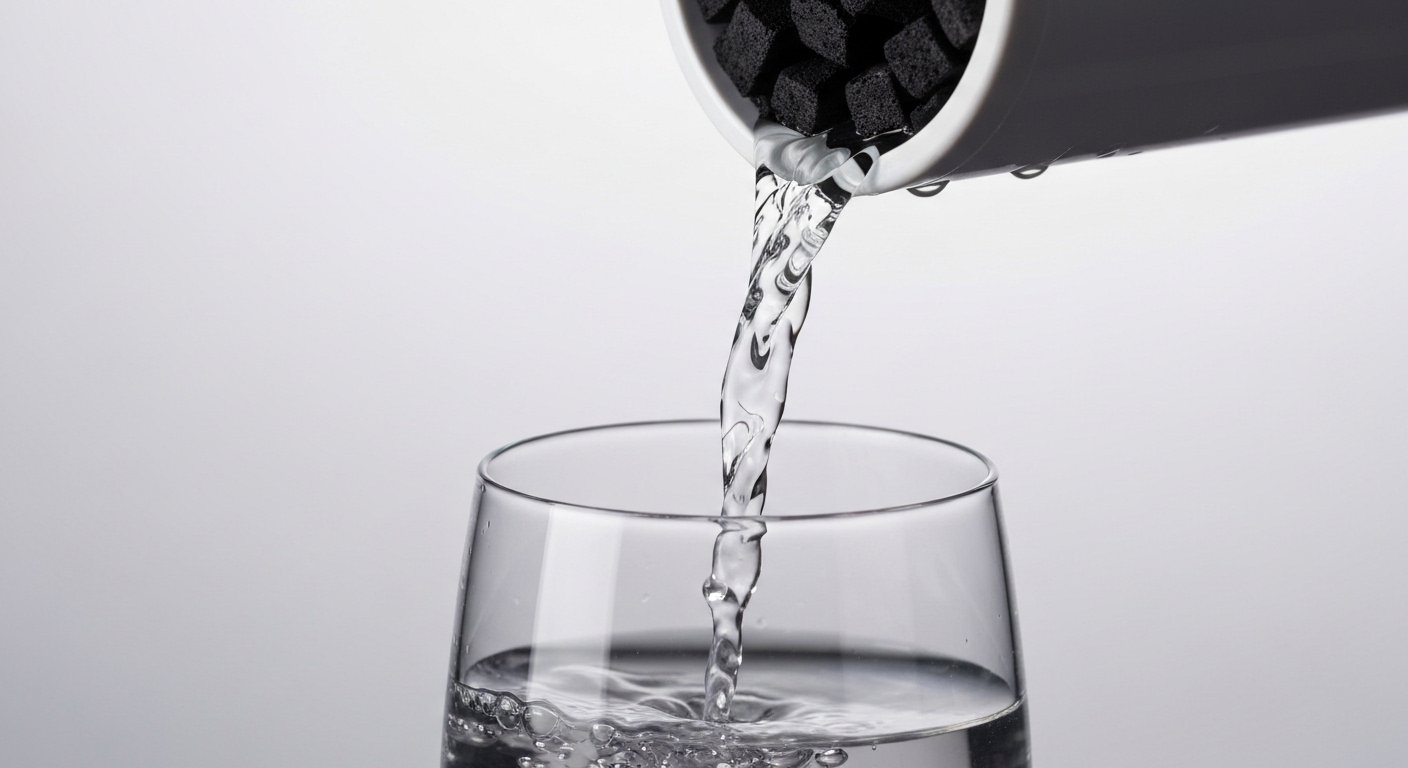
- Activated charcoal (or crushed regular charcoal from a hardwood fire) — 3-4 inches
- Fine sand — another 2-3 inches on top
- A cloth or bandana on the very top to pre-filter debris
Pour water through the top and collect what drips out the bottom. The sand traps sediment and larger organisms. The charcoal adsorbs chemicals, improves taste, and removes some heavy metals. After a few weeks of use, a biological layer (called a schmutzdecke — gotta love German) develops in the top sand layer that actually consumes pathogens.
Now here’s the critical caveat: a DIY filter like this significantly reduces biological and chemical contaminants, but it’s not a guaranteed sterilizer. You should still boil or chemically treat the filtered water before drinking it, especially in the first few weeks before the biological layer has established. Think of it as your first line of defense, not your only one.
🏠 Build Your Own Water Generation System
The Water Freedom System provides step-by-step blueprints for building a device that produces clean water from humidity — using basic hardware store parts. Many off-gridders use it as a backup water source alongside their primary purification setup.
→ Check out the Water Freedom System blueprints | Read our full review
Which Water Purification Method Should You Use? (It Depends.)
No single method is perfect for every situation. Here’s a quick comparison to help you decide:
| Method | Removes Bacteria | Removes Viruses | Removes Chemicals | Needs Power? | Cost | Best For |
|---|---|---|---|---|---|---|
| Boiling | ✅ | ✅ | ❌ | Heat source | Free | Immediate short-term use |
| Gravity Filter | ✅ | Varies | Some | No | $30-$350 | Daily homestead use |
| Chemical Treatment | ✅ | ✅ | ❌ | No | Very low | Large volume / stockpiling |
| UV Purification | ✅ | ✅ | ❌ | Batteries/Sun | $50-$100 | Travel / portable use |
| Distillation | ✅ | ✅ | ✅ | Heat source | $100-$500 | Saltwater / heavy contamination |
| Reverse Osmosis | ✅ | ✅ | ✅ | Yes (pressure) | $150-$300 | Primary home system |
| DIY Sand/Charcoal | Partial | ❌ | Partial | No | Nearly free | Emergency / last resort |
My honest recommendation? Layer your approach. Most serious homesteaders run an RO system for daily use, keep a Berkey as a backup, have chemical treatment supplies stockpiled, and know how to build a DIY filter and solar still from scratch. Redundancy isn’t paranoia — it’s planning.
How Much Water Do You Actually Need Per Day?
The standard guideline is one gallon per person per day for drinking and basic hygiene. But that number is misleading.
One gallon keeps you alive. It doesn’t cover cooking, cleaning dishes, washing hands (which becomes even more critical during a crisis when sanitation infrastructure may be compromised), watering animals, or any of the hundred other things you use water for on a homestead.
A more realistic target for homestead living:
- Drinking: 0.5-1 gallon per person per day
- Cooking: 0.5 gallon per person per day
- Basic hygiene: 1-2 gallons per person per day
- Livestock: varies wildly (chickens need about a cup each; a cow needs 15-20 gallons)
- Garden irrigation: this is the big one — can easily exceed everything else combined
Plan for at least 3-5 gallons per person per day if you want anything resembling normal life. And remember — your purification system’s output rate needs to match or exceed your consumption rate, or you’ll slowly drain your reserves.
These are the water purification tools we personally recommend and use:
• LifeStraw Personal Water Filter — Weighs just 2 oz, filters 1,000 gallons, and costs about the price of a pizza. Every bug-out bag needs one.
• Aquatabs Water Purification Tablets (30-Pack) — Compact, lightweight chemical treatment that purifies 30 liters. Perfect for stockpiling.
• 5-Gallon BPA-Free Water Storage Container — Food-grade, stackable, and essential for building your emergency water reserve.
Putting It All Together: Your Water Purification Game Plan
Clean water isn’t a luxury. On a homestead — or in any emergency — it’s the single resource you absolutely cannot go without. The methods in this guide range from free (boiling, SODIS, DIY sand filters) to a few hundred dollars (RO systems, gravity filters), and the best approach combines multiple layers of redundancy.
Here’s what I’d suggest as a starting point:
- Immediate: Learn to boil water properly and stock calcium hypochlorite for emergency chemical treatment
- Short-term: Invest in a quality gravity filter (Berkey for home, Sawyer for portable)
- Long-term: Install an RO system if you have a well, and learn to build a solar still and bio-sand filter as emergency backups
And if you’re serious about water independence — which you should be — it’s worth exploring systems that can actually generate water rather than just purifying what you find. The Air Fountain system produces drinking water from atmospheric humidity, which is a genuine game-changer for homesteads in dry climates or areas with unreliable water sources. (We wrote a detailed Air Fountain review if you want the full breakdown.)
For the DIY crowd, the Water Freedom System provides blueprints for building your own water-from-air device using hardware store parts. It pairs perfectly with the purification methods above — generate the water, then filter it for absolute peace of mind. Here’s our review.
🌱 Ready to Take Your Homestead to the Next Level?
Water is just one piece of the self-sufficiency puzzle. Joel Salatin’s “Farm Like a Lunatic” course covers everything from water management to regenerative farming, livestock systems, and building a homestead that actually sustains itself. If you’re serious about this lifestyle, it’s the most comprehensive resource I’ve found.
Water security isn’t a one-and-done project. It’s an ongoing part of homestead life — right up there with food production, shelter, and energy. But once you’ve got your systems in place and your knowledge dialed in, you’ll sleep a whole lot better knowing that whatever happens, your family can drink.
Stay prepared. Stay hydrated. And keep building that resilient life.