
Disclosure: As an Amazon Associate, I earn from qualifying purchases. Links below may be affiliate links. Thank you for supporting Homestead Fanatic!
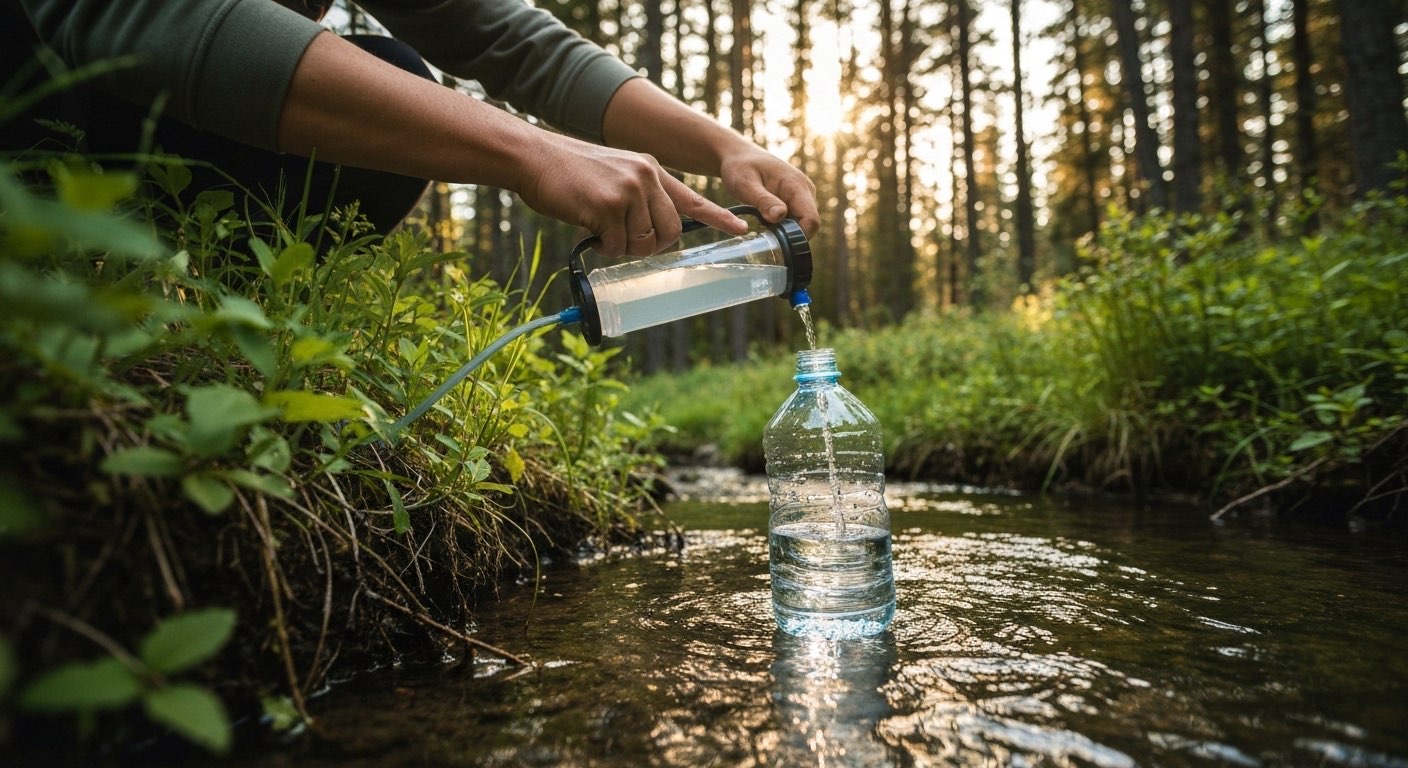
Clean water is non-negotiable. You can survive weeks without food, but just three days without water and you’re in serious trouble. And here’s the kicker—even that pristine-looking creek running through your property? It’s probably loaded with giardia, cryptosporidium, and bacteria you definitely don’t want to meet.
We’ve been filtering water on our homestead for over eight years now. Well water, rainwater collection, creek water during droughts… we’ve run it all through every type of filter imaginable. Some worked great. Others? Complete waste of money. The difference between a good gravity water filter for your homestead and a cheap imitation becomes painfully obvious when you’re dealing with a stomach bug in a cabin with no plumbing.
Here’s what most people get wrong: they buy a filter based on price or marketing hype without understanding what it actually removes. Not all filters are created equal. Some handle bacteria but miss viruses. Others remove chemicals but struggle with sediment. For off-grid water filtration, you need the right tool for your specific situation.
Quick Navigation:
- Top Pick: Sawyer Products Gravity System
- Budget Pick: LifeStraw Personal Filter
- Premium Pick: Waterdrop King Tank Stainless Steel
Why Trust Our Recommendations
We don’t just review products from air-conditioned offices. Our testing happens on actual homesteads and off-grid properties—filtering murky pond water, questionable well water, and everything in between. When we recommend the best water filter for homestead use, it’s because we’ve staked our family’s health on these exact products.
Our Top Picks at a Glance
| Product | Best For | Price Range | Rating |
|---|---|---|---|
| Sawyer Gravity Water System | Best Overall | $$ | ⭐⭐⭐⭐⭐ |
| LifeStraw Personal Filter | Budget/Portable | $ | ⭐⭐⭐⭐½ |
| Waterdrop King Tank Stainless Steel | Premium Home System | $$$$ | ⭐⭐⭐⭐⭐ |
| Sawyer Products Mini | Best Ultralight | $ | ⭐⭐⭐⭐⭐ |
| LifeStraw Home Pitcher | Best Daily Use | $$ | ⭐⭐⭐⭐ |
| Katadyn Hiker Pro | Best for Backcountry | $$$ | ⭐⭐⭐⭐½ |
| Survivor Filter PRO | Best Versatility | $$ | ⭐⭐⭐⭐⭐ |
1. Sawyer Gravity Water System — Best Overall
!
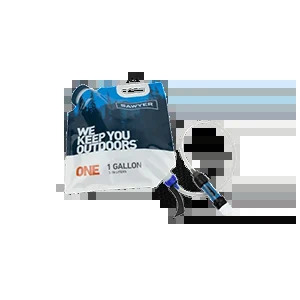
Why We Love It: The Sawyer Gravity System has become the backbone of off-grid water filtration for a reason. Fill the bag, hang it up, and let gravity do the work while you handle other chores. No pumping, no electricity, no fuss. For homesteaders managing multiple daily tasks, this hands-free approach is genuinely life-changing.
What separates Sawyer from the competition is their hollow fiber membrane technology. At 0.1 microns absolute, it filters out 99.99999% of bacteria and 99.9999% of protozoa. That’s not marketing fluff—those are numbers that exceed EPA standards for water purifiers. We’ve filtered some genuinely questionable water through ours and never had an issue.
The 1-gallon capacity processes water quickly—about 2 liters per minute under good conditions. And unlike those expensive gravity systems that cost $300+, the Sawyer runs around $50 and filters up to 100,000 gallons. That’s potentially a lifetime of clean water for less than a nice dinner out.
One thing we love: the filter is backflushable and reusable. Other systems require expensive replacement cartridges every few months. The Sawyer just needs occasional cleaning with the included syringe, and it keeps going. For a homestead operation, that long-term cost savings adds up fast.
Key Features:
- 0.1 micron absolute hollow fiber membrane
- 100,000 gallon filter lifespan
- Processes ~2 liters per minute via gravity
- Includes 1-gallon reservoir and tubing
- Backflushable and field-maintainable
- Removes bacteria, protozoa, and microplastics
Pros:
- Exceptional value—pennies per gallon filtered
- Hands-free gravity operation
- Incredibly long-lasting filter element
- Lightweight and packable for bug-out scenarios
- No replacement cartridges to stockpile
Cons:
- Does NOT remove viruses (rare concern in North America)
- Does NOT remove chemicals, heavy metals, or improve taste
- Reservoir bags can puncture with rough use
- Slower flow in cold temperatures
Price: $$
2. LifeStraw Personal Filter — Budget Pick
!
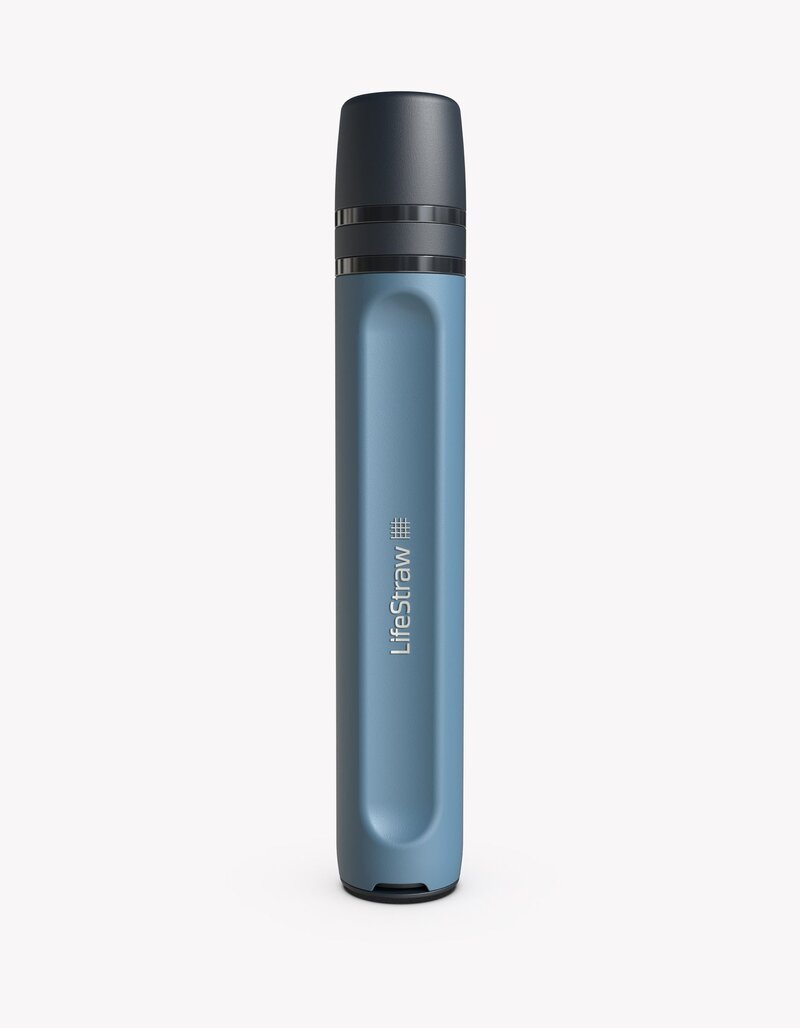
Why We Love It: The LifeStraw is basically the AK-47 of water filters—simple, reliable, and almost impossible to break. For under $20, every member of your family can have personal water filtration capability. We keep them in bug-out bags, vehicles, and stashed in various locations around the property.
Don’t let the simplicity fool you. The membrane microfilter removes 99.999999% of bacteria and 99.999% of parasites. It’s been tested by organizations fighting waterborne disease in developing countries, and it’s saved countless lives. The technology is proven.
Here’s a real-world scenario: power outage, well pump dead, you need to drink from the creek behind your property. With a LifeStraw, you just walk down, find the clearest spot, and drink directly from the source. No prep, no setup, no waiting. In an emergency, that immediacy matters.
The Peak Series Solo improves on the original design with better ergonomics and a lanyard for easy carrying. It filters up to 1,000 gallons before needing replacement—that’s about two years of drinking water for one person. For emergency preparedness, you really can’t beat the price-to-capability ratio.
Key Features:
- Membrane microfilter removes bacteria, parasites, microplastics
- Filters up to 1,000 gallons (4,000 liters)
- Weighs only 2 oz—fits anywhere
- No batteries, moving parts, or chemicals
- BPA-free and phthalate-free
- Built-in lanyard for carry
Pros:
- Incredibly affordable—buy multiples for the whole family
- Virtually indestructible
- Zero learning curve
- Gives Back program supports communities in need
- Perfect for bug-out bags and vehicle kits
Cons:
- Personal use only—can’t filter for groups
- Must drink directly from source or use adapter
- Does NOT remove viruses or chemicals
- No storage capability
Price: $
3. Waterdrop King Tank Stainless Steel System — Premium Pick
!
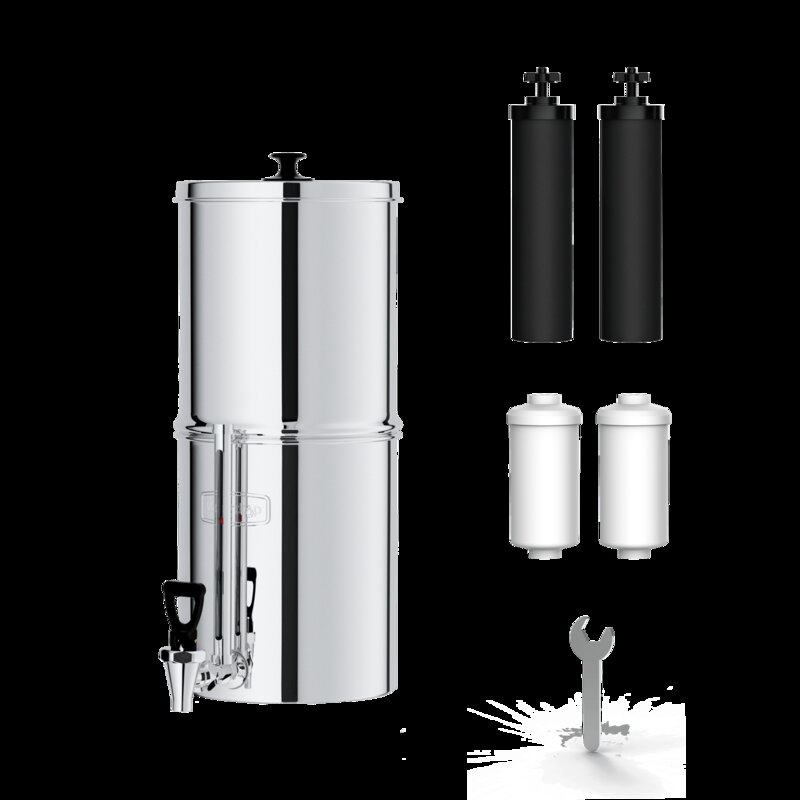
Why We Love It: If you’re building a permanent homestead water solution, a premium stainless steel gravity system is what serious homesteaders dream about. This isn’t camping gear—it’s a countertop system that looks as good as it performs, filtering your water supply day in and day out without complaint.
The Waterdrop King Tank uses advanced multi-stage filtration technology. Unlike basic filters that only catch particles, this system removes bacteria, parasites, chlorine, heavy metals, and reduces pharmaceuticals and chemicals. That’s comprehensive protection for families concerned about what’s actually in their water supply.
The generous capacity means you fill it once and have clean water for hours. A family of four can rely on this throughout the day. The food-grade 304 stainless steel construction will outlast your kitchen renovation—probably multiple renovations. The filters have excellent longevity, so replacement is an annual consideration at most for typical households.
What we appreciate about quality stainless steel gravity systems: they work without electricity, require no plumbing, and provide consistently clean water regardless of what’s happening with the grid. When supply chains get disrupted (and they will), having reliable gravity filtration matters.
Key Features:
- 2.25-gallon stainless steel construction
- Multi-stage filtration elements included
- Removes bacteria, parasites, cysts, heavy metals
- Reduces chlorine, pharmaceuticals, and chemicals
- Long-lasting filter elements
- Food-grade 304 stainless steel housing
Pros:
- Comprehensive contaminant removal
- Beautiful countertop design
- Exceptional build quality and longevity
- Gravity-fed—works during power outages
- Easy to maintain and clean
Cons:
- Significant upfront investment
- Takes countertop space
- Slower filtration than pump systems
- Heavy—not portable
Price: $$$$
4. Sawyer Products MINI — Best Ultralight
!
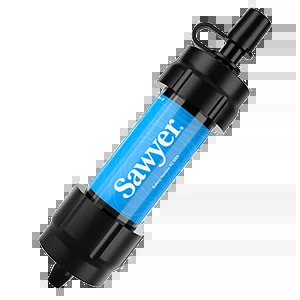
Why We Love It: The Sawyer MINI is the filter that changed everything. At just 2 ounces and roughly the size of your palm, it delivers the same proven hollow fiber technology as larger Sawyer systems. Every serious prepper we know carries one, and most carry several.
We’ve used these extensively for backcountry hunting, emergency hiking, and as backup filters when primary systems fail. The MINI attaches directly to included squeeze pouches, most water bottles, and even hydration bladders. That versatility means you can adapt it to whatever container situation you encounter.
The flow rate is slower than larger Sawyer filters—you’ll need some patience when filling large containers. But for personal hydration on the move, it’s nearly instant. Squeeze and drink. That’s it. The MINI has saved our bacon on more than one occasion when we found ourselves far from camp with empty bottles.
With a 100,000-gallon filter life, the MINI will likely outlast everything else in your kit. At around $25, buying several for redundancy is a no-brainer. We keep one in every vehicle, every backpack, and every emergency kit we own.
Key Features:
- 0.1 micron hollow fiber membrane
- Weighs only 2 oz
- 100,000 gallon filter lifespan
- Attaches to included pouches and most bottles
- Inline compatible with hydration bladders
- Includes 16 oz squeeze pouch and cleaning syringe
Pros:
- Lightest full-capability filter available
- Incredible lifespan and value
- Multiple attachment options
- Lifetime warranty from Sawyer
- Field-cleanable with backflush syringe
Cons:
- Slower flow rate than larger filters
- Small pouches can be tedious for group use
- Cold weather significantly reduces flow
- Pouches are fragile—carry spares
Price: $
5. LifeStraw Home Pitcher — Best Daily Use
!
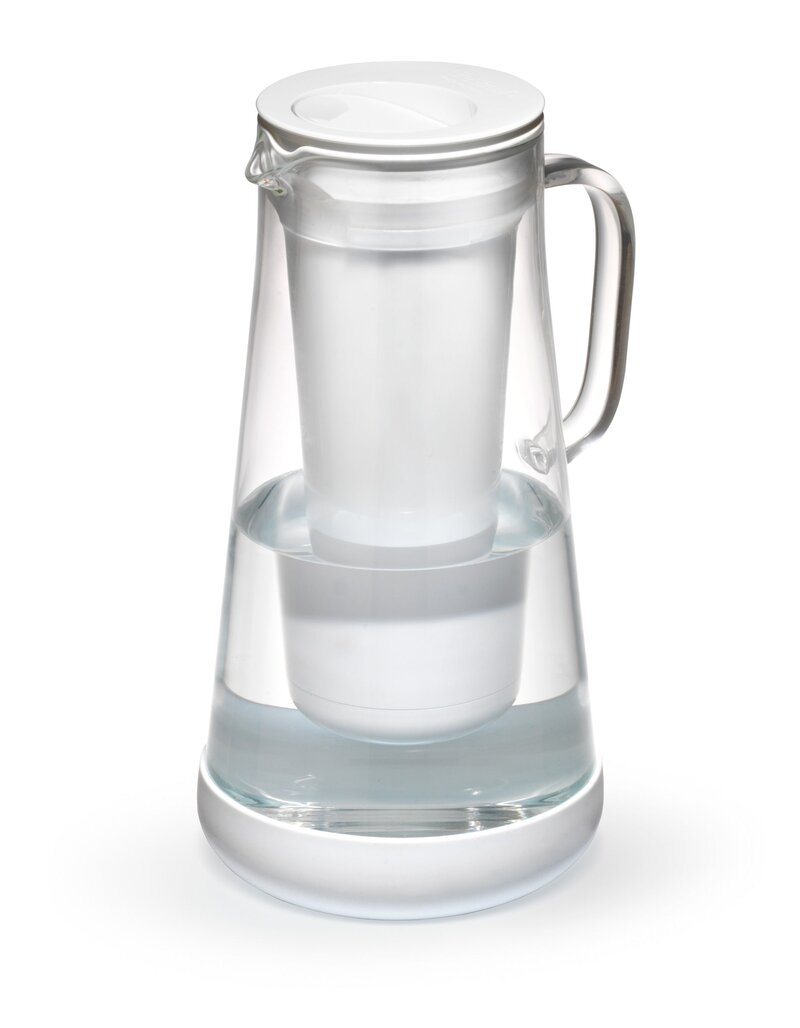
Why We Love It: Not every filter needs to be tactical. The LifeStraw Home Pitcher brings advanced filtration to your everyday drinking water with the convenience of a standard kitchen pitcher. For homesteaders transitioning from municipal water or dealing with questionable well quality, this is the civilized option.
What makes this pitcher special is the dual-stage filtration. The membrane microfilter handles biological contaminants while the activated carbon plus ion exchange stage tackles chemicals, heavy metals, and pharmaceuticals. It’s a one-two punch that most pitcher filters can’t match.
The 7-cup glass carafe looks elegant enough for the dinner table but performs like serious filtration equipment. Lead, mercury, PFAS chemicals, microplastics—all significantly reduced. For families with children especially, knowing your everyday drinking water is genuinely clean brings peace of mind.
A common off-grid setup pairs a pitcher like this with a gravity system: the pitcher handles daily drinking and cooking water from the well, while the larger gravity filter covers bulk needs. Owners running that combination consistently report their water-quality concerns disappear.
Key Features:
- Dual-stage membrane + carbon filtration
- 7-cup BPA-free glass carafe
- Removes bacteria, parasites, microplastics
- Reduces lead, mercury, PFAS chemicals
- Filter life: 264 gallons (40 gallons for PFAS)
- Silicone base prevents slipping
Pros:
- Beautiful design fits any kitchen
- Comprehensive contaminant removal
- Easy to fill and pour
- Great for daily use drinking water
- Each purchase provides safe water to a child in need
Cons:
- Smaller capacity than gravity systems
- Filter replacement more frequent than competitors
- Glass construction can break
- Not suitable for emergency bulk filtration
Price: $$
6. Katadyn Hiker Pro — Best for Backcountry
!
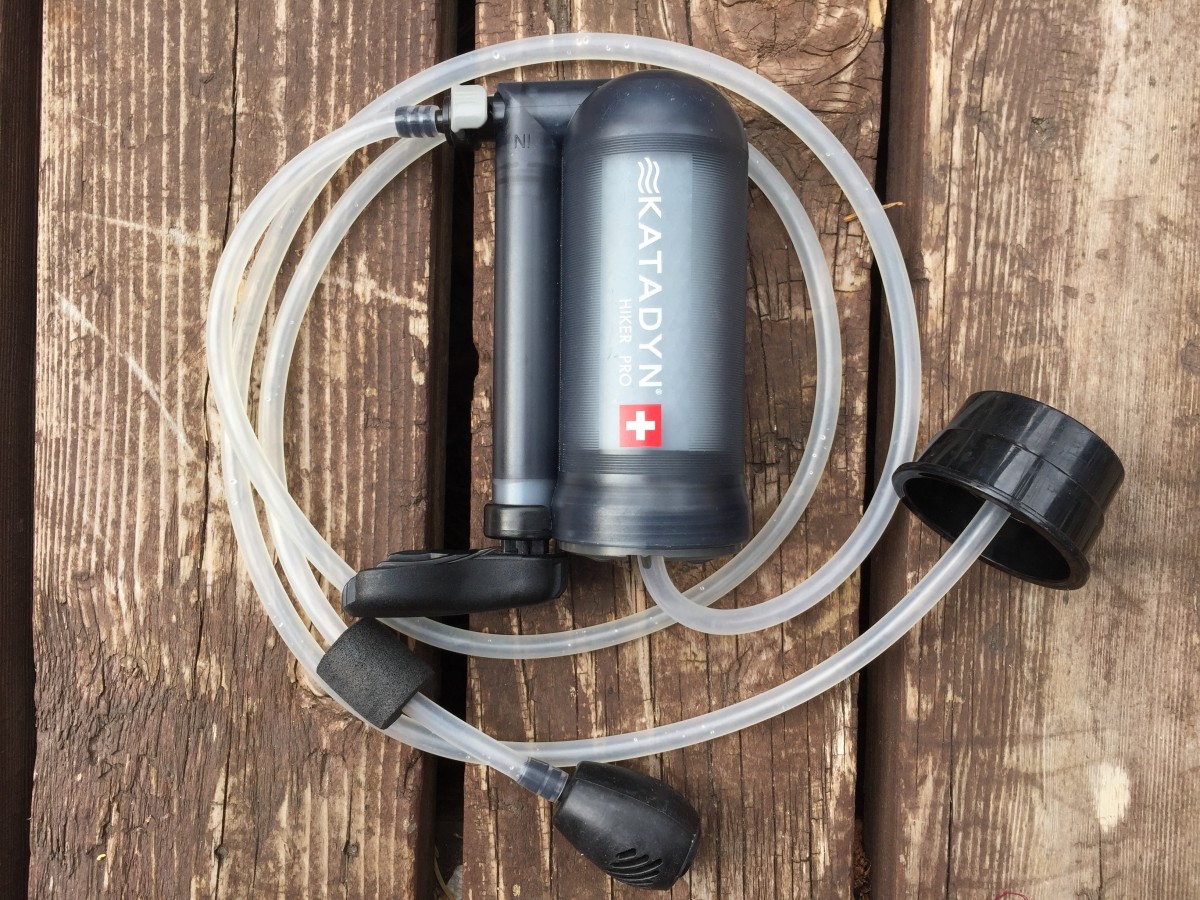
Why We Love It: Katadyn has been making water filters for military, humanitarian, and outdoor applications since the 1920s. The Hiker Pro represents decades of refinement—a pump filter that’s become the backcountry standard for hikers, hunters, and off-grid travelers who need reliable filtration far from civilization.
The pump design gives you speed and control that gravity filters can’t match. You can fill a liter bottle in about a minute of pumping—faster if the water is clear. When you’re dehydrated on the trail or need to quickly top off before a storm rolls in, that speed matters.
We particularly appreciate the Quick Connect system. Attach it to your hydration bladder or water bottle without fumbling with tubing. The whole setup is designed for real-world use by people wearing gloves, working in the dark, or dealing with adverse conditions.
The Hiker Pro uses a pleated glass fiber filter that’s cleanable in the field. When flow slows down, you just scrub the element and keep going. Replacement cartridges filter about 1,150 liters each—reasonable for the serious backcountry traveler.
Key Features:
- 0.2 micron glass fiber filter
- Pumps 1 liter per minute
- QuickConnect fitting system
- Field-cleanable filter element
- Activated carbon core improves taste
- AntiClog technology for silty water
Pros:
- Fast filtration when you need it
- Proven technology from industry leader
- Works with any container
- Better sediment handling than hollow fiber
- Activated carbon removes bad taste
Cons:
- Requires manual pumping
- Heavier than squeeze-style filters
- Moving parts can fail
- Higher cost per gallon than Sawyer
Price: $$$
7. Survivor Filter PRO — Best Versatility
!
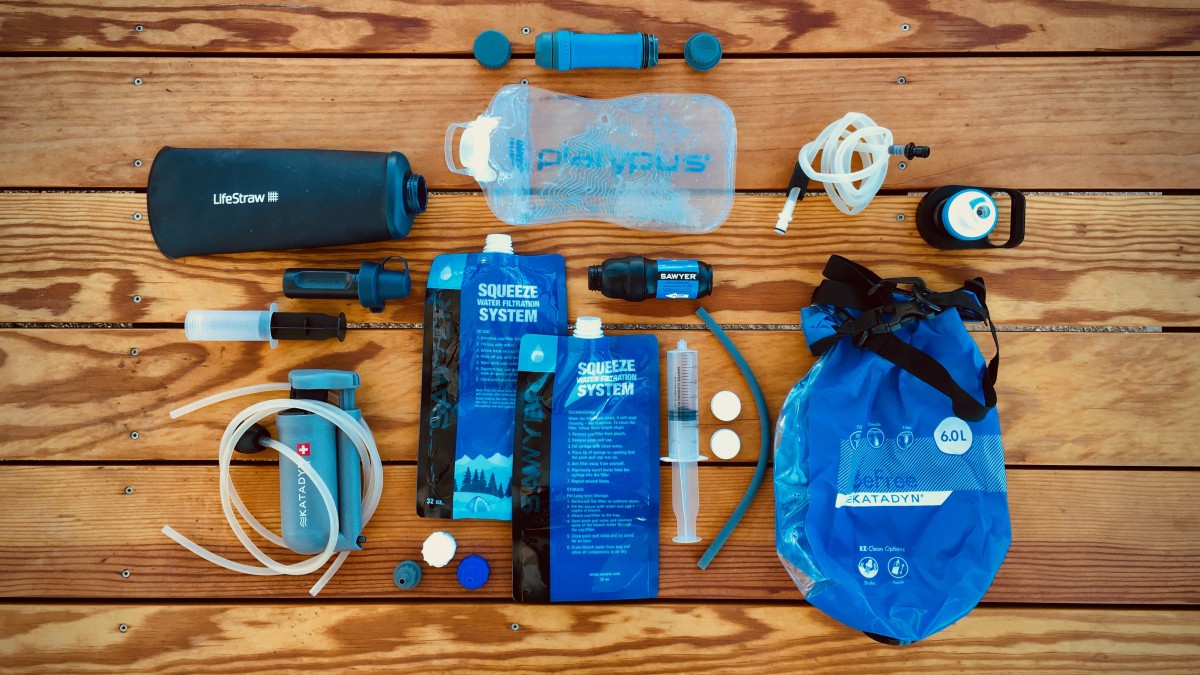
Why We Love It: The Survivor Filter PRO packs three-stage filtration into a package that works as a pump, gravity system, or inline filter. That kind of versatility is rare, and it makes this filter adaptable to almost any situation you might encounter on the homestead or on the road.
Here’s what’s clever: the pre-filter catches sediment, the ultra-filter handles bacteria and protozoa down to 0.01 microns, and the carbon filter improves taste and reduces chemicals. Three stages in a compact unit that you can actually carry. Most multi-stage systems are bulky countertop affairs—this one fits in your pack.
We’ve been genuinely impressed by the 0.01 micron capability. That’s finer than most competitors and gives you better protection against smaller contaminants. For homesteaders filtering water from multiple sources with varying quality, that extra margin of safety is welcome.
The replaceable filter components are reasonably priced and widely available. When one stage wears out, you replace just that element rather than the whole unit. Long-term, that’s a significant cost advantage over sealed filter systems.
Key Features:
- Triple-stage filtration (0.01 micron ultra filter)
- Works as pump, gravity, or inline filter
- Removes bacteria, parasites, and heavy metals
- Activated carbon improves taste
- Filters up to 100,000 liters
- Individually replaceable filter stages
Pros:
- Three-way versatility unusual for this price
- Finer filtration than most competitors
- Replaceable individual components
- Good flow rate for a multi-stage system
- Compact and well-built
Cons:
- More complex than single-stage filters
- Pumping can be tiring for large volumes
- Multiple seals mean more potential failure points
- Heavier than basic filters
Price: $$
How to Choose the Right Water Filter for Your Homestead
Picking the best water filter for homestead use comes down to understanding your specific situation. What works for a backcountry hunter is different from what a family homestead needs, which is different from what goes in your bug-out bag. Let’s break down the key factors.
Understand Your Water Source
Start by honestly assessing what you’re filtering. Clear well water with occasional sediment needs different treatment than murky pond water or chlorinated municipal supply. If your source is relatively clean, a basic hollow fiber filter like the Sawyer handles it efficiently. If you’re dealing with chemical contamination, heavy metals, or pharmaceutical residue, you need activated carbon or ceramic filtration with carbon cores.
Get your water tested. A basic test kit from Amazon runs about $30 and tells you what you’re actually dealing with. That knowledge prevents you from buying more filtration than you need—or worse, less than you need.
Consider Volume Requirements
How much filtered water do you need daily? A single person camping might drink 2-3 liters. A family of four at a homestead goes through 3-5 gallons minimum for drinking, cooking, and basic hygiene. Calculate your actual needs before shopping.
For high-volume situations, gravity systems excel. Set them up, fill the reservoir, and walk away. A large stainless steel gravity system or Sawyer gravity setup can process gallons without constant attention. For personal use or emergency backup, smaller filters like the LifeStraw or Sawyer MINI make more sense.
Plan for Redundancy
Here’s something experienced homesteaders know: one filter isn’t enough. Filters clog, parts break, and situations change. We recommend at least three layers of water filtration capability:
1. Primary daily system — Your workhorse (gravity filter or countertop system) 2. Portable backup — Compact filter for bug-out scenarios or equipment failure 3. Deep emergency reserve — Chemical treatment tablets as absolute last resort
This layered approach ensures you’re never completely without safe water, regardless of circumstances. Speaking of emergencies, make sure your backup power plan can support any pumped filtration systems—our guide to solar chargers for emergency preparedness covers the essentials.
Maintenance and Long-Term Costs
That $30 filter might look like a bargain until you realize replacement cartridges cost $50 every three months. Calculate the cost per gallon over several years before committing. Sawyer’s filters with 100,000-gallon lifespans often beat expensive alternatives on total cost, even if the upfront price is slightly higher.
Also consider maintainability. Can you clean the filter in the field? Are replacement parts readily available? Will it still work if supply chains get disrupted? For a true off-grid water filtration setup, these questions matter more than raw specifications.
Frequently Asked Questions
What is the best water filter for off-grid living?
For most off-grid situations, gravity-fed filters offer the best combination of performance, convenience, and reliability. The Sawyer Gravity System or Waterdrop King Tank work without electricity, require minimal attention during operation, and process enough volume for family use. If you’re on a budget, the Sawyer provides exceptional filtration at around $50. If you want premium comprehensive filtration including chemical removal, the Waterdrop King Tank is worth the investment.
Do I need a filter that removes viruses?
In North America, waterborne viruses are relatively rare—bacteria and protozoa are the primary concerns. Standard hollow fiber filters like Sawyer and LifeStraw handle these effectively. However, if you’re filtering questionable water with potential sewage contamination, or traveling internationally, virus removal (0.02 microns or chemical treatment) becomes more important. For homestead use with well or surface water in the US/Canada, virus removal is generally unnecessary.
How often should I replace my water filter?
This varies dramatically by filter type and water quality. Hollow fiber filters like Sawyer can last 100,000 gallons with proper cleaning. Ceramic filters typically need replacement after 3,000-6,000 gallons. Carbon filters that improve taste and remove chemicals usually need replacement every 200-500 gallons, depending on contamination levels. Check manufacturer guidelines and watch for reduced flow rate—that’s the clearest sign your filter needs attention.
Can I filter rainwater with these systems?
Absolutely. Rainwater collection filtered through these systems is a fantastic homestead water source. However, rainwater often picks up sediment and contaminants from collection surfaces. Use a pre-filter or let sediment settle before running through your main filter—this extends filter life significantly. The Sawyer gravity system and quality stainless steel countertop filters handle rainwater excellently when properly collected.
What’s the difference between a water filter and a water purifier?
Technically, “purifiers” remove or kill viruses while “filters” only remove particles down to 0.1-0.2 microns (catching bacteria and protozoa but not smaller viruses). However, manufacturers use these terms loosely. For most homestead applications in North America, a quality filter is sufficient. True purification typically requires chemical treatment (chlorine, iodine), UV light, or specialized membrane filtration—overkill for typical off-grid needs but valuable for international travel or contaminated urban water supplies.
Final Thoughts
Clean water is the foundation of homestead life. Everything else—gardening, livestock, food preservation—depends on reliable access to safe drinking water. Investing in proper water filtration isn’t optional; it’s essential.
For most homesteaders, we recommend starting with the Sawyer Gravity System as your daily workhorse. It’s affordable, reliable, and handles the volume a family needs without electricity or constant attention. Supplement it with a few LifeStraw personal filters for emergency portability, and you’ve got a solid foundation.
If budget allows and you want the premium experience, the Waterdrop King Tank delivers countertop convenience with exceptional filtration capabilities. It’s the civilized option for homesteads that want filtered water without the outdoor gear aesthetic.
Whatever you choose, get something. Test it before you need it. And remember—your body can handle imperfect food for days, but bad water will take you down fast. Don’t wait for an emergency to discover your filtration plan has gaps.
Stay prepared. Stay hydrated. Stay healthy.
Last Updated: February 2026