
Last updated: February 2026
Disclosure: This post contains affiliate links. If you purchase through these links, we may earn a commission at no extra cost to you. See our affiliate disclosure for details.
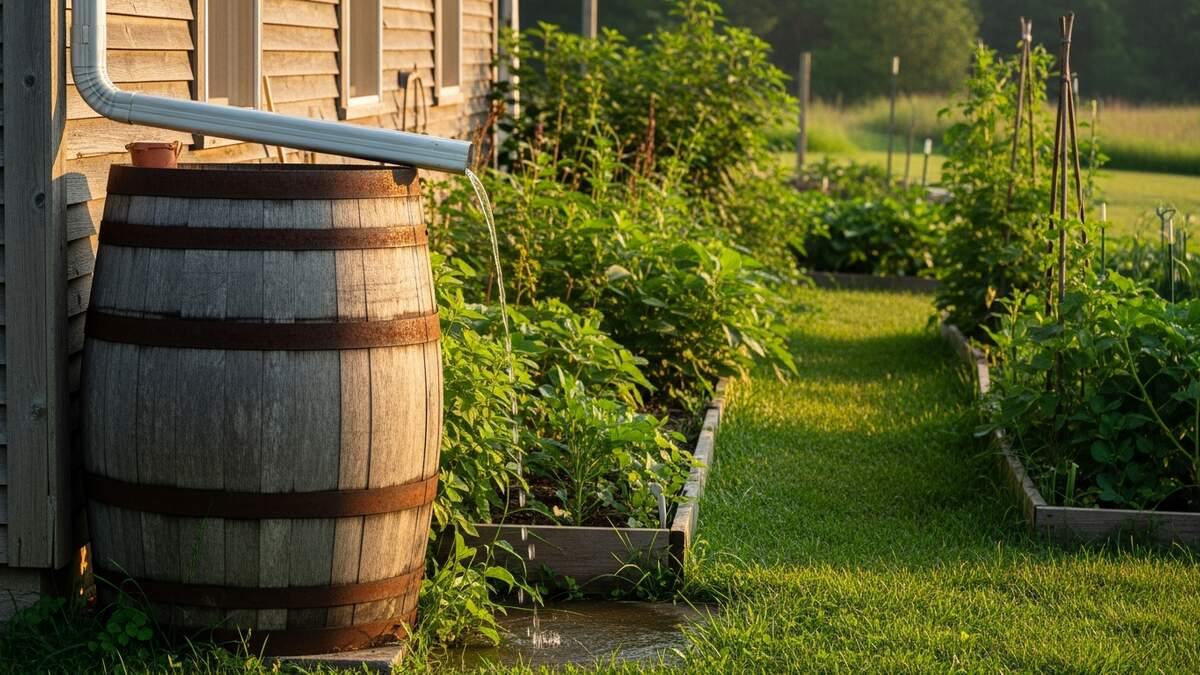
There’s something deeply satisfying about watching rain pour off your roof and knowing it’s not just running into the storm drain. It’s filling your rain barrel, ready to hydrate your garden, top off the chickens’ waterer, or scrub down your equipment. Free water from the sky? That’s the kind of self-reliance we’re all about.
I’ve been using rain barrels on our homestead for years now, and let me tell you—once you start collecting rainwater, you’ll wonder why you ever let all that good water go to waste. A single inch of rain on a 1,000 square foot roof produces about 600 gallons of water. That’s real money saved on your water bill and one step closer to true independence.
But not all rain barrels are created equal. Some crack after one winter. Others have spigots so poorly designed you’ll spend more time fiddling with them than actually watering your tomatoes. So I’ve rounded up the best rain barrels you can actually buy—ones that work, last, and won’t make you regret the purchase.
Quick Comparison: Best Rain Barrels for 2026
| Rain Barrel | Best For | Capacity | Material | Price Range |
|---|---|---|---|---|
| RTS Home Accents 50 Gal | Overall Value | 50 gal | Recycled Plastic | $90-120 |
| FreeGarden RAIN | Durability | 55 gal | UV-Stabilized Resin | $120-150 |
| EarthMinded RainStation | Complete Kit | 45 gal | Food-Grade HDPE | $100-130 |
| FCMP Outdoor RC4000 | Space Saving | 50 gal | Recycled PE | $100-120 |
| Good Ideas Savannah | Decorative | 50 gal | Polyethylene | $130-160 |
| Emsco Rescue Water Urn | Garden Decor | 50 gal | Plastic | $80-110 |
| FCMP Outdoor 45-Gallon | Budget Option | 45 gal | Recycled PE | $70-90 |
| 55 Gallon Recycled Barrel | Eco-Friendly | 55 gal | Repurposed Plastic | $70-100 |
What to Look for in a Rain Barrel
Before we dive into specific products, let’s talk about what actually matters when choosing a rain barrel. I’ve made some mistakes over the years, so you don’t have to.
Capacity matters—but so does footprint. A 50-65 gallon barrel is the sweet spot for most homesteaders. Big enough to be useful, not so big it takes over your patio. Remember, a full 50-gallon barrel weighs over 400 pounds. Make sure your foundation can handle it.
Material durability is non-negotiable. Look for UV-stabilized polyethylene or HDPE. Cheap plastic cracks after a few seasons of sun exposure. Dark colors help prevent algae growth inside the barrel.
Spigot quality separates the good from the frustrating. Brass spigots outlast plastic ones by years. Make sure the spigot sits high enough off the ground to fit a watering can underneath—seems obvious, but many barrels get this wrong.
Overflow protection prevents problems. When that barrel fills up (and it will, faster than you’d think), you need somewhere for the water to go. A proper overflow valve directs excess water away from your foundation.
Debris screens keep it clean. A good mesh screen on top keeps leaves, bugs, and mosquitoes out. You don’t want to be dealing with a mosquito breeding ground.
Best Overall: RTS Home Accents 50-Gallon ECO Rain Barrel (B00YFT9846)


This is the barrel I recommend most often, and for good reason. The RTS Home Accents strikes that perfect balance between price, durability, and features that makes it hard to beat.
What Works:
- 100% recycled plastic. Made from recycled materials, so you’re keeping plastic out of landfills while collecting free water. Double win.
- Flat-back design. Sits flush against your house or fence, saving space and keeping a low profile.
- Oak barrel aesthetics. The molded texture actually looks decent—way better than a plain plastic drum.
- Brass spigot included. Not the plastic junk that cracks in cold weather.
- Linkable ports. Threaded fitting lets you connect multiple barrels together when one isn’t enough.
What Could Be Better:
- Don’t leave it outside in freezing temps. The plastic can crack if water freezes inside. Drain it before winter or bring it under cover.
- The screen could be finer. Works for leaves, but smaller debris gets through.
Specs:
- 50-gallon capacity
- 24″ L x 19″ W x 34″ H
- UV-resistant recycled plastic
- Includes brass spigot and overflow
- Oak barrel appearance
For most homesteaders, this is the one to get. It’s not the cheapest, but the quality justifies the price—and it’ll last you years instead of one or two seasons.
Best for Durability: FreeGarden RAIN Barrel (B00FWN9QK0)


If you’re the type who buys quality once and expects it to last, the FreeGarden RAIN deserves your attention. This barrel is built like a tank—FDA-approved, BPA-free resin that shrugs off UV rays without fading or degrading.
Standout Features:
- High-quality brass spigot. Elevated position means you don’t need a stand to fill watering cans.
- 55-gallon capacity. A little extra room for those heavy rain events.
- Child-proof lid. Peace of mind if you’ve got little ones running around.
- Metal debris screen. Sturdy construction keeps pests out.
- Dual-side linking. Pre-threaded ports on both sides for daisy-chaining multiple barrels.
Trade-offs:
- More expensive than basic options
- The branding is pretty prominent if you care about aesthetics
- Square shape doesn’t blend into all landscapes
Specs:
- 55-gallon capacity
- BPA-free, FDA-approved resin
- UV-stabilized construction
- Flat-back design for wall or corner placement
- Brass spigot and metal screen included
The FreeGarden is overkill for casual gardeners, but perfect for serious homesteaders who demand reliability.
Best Complete Kit: EarthMinded RainStation (B00F5405R4)


New to rainwater harvesting? The EarthMinded RainStation is the easiest way to get started. Everything you need is in the box—including the diverter that channels water from your downspout directly into the barrel.
Why Beginners Love It:
- Complete diverter kit included. No separate purchases, no confusion. The diverter attaches to your existing downspout and automatically directs water to your barrel.
- Reversible planter lid. Flip it over to grow flowers or herbs on top. Your rain barrel becomes part of your garden instead of an eyesore.
- Food-grade HDPE resin. Safe for water that’ll touch your edible plants.
- Sealed lid design. Keeps mosquitoes from breeding. This is a bigger deal than most people realize.
Considerations:
- 45-gallon capacity is slightly smaller than competitors
- Terracotta and black are the only color options
- The planter feature requires maintenance
Specs:
- 45-gallon capacity
- Food-grade HDPE construction
- Includes complete diverter installation kit
- Reversible planter/cover lid
- Available in terracotta or black
If you’ve never installed a rain barrel before, start here. The included diverter alone saves you time and money.
Best Space-Saving Design: FCMP Outdoor RC4000 (B00LIGPOW4)


Living on a smaller property or tight on space? The FCMP RC4000’s flat-back design maximizes your water collection while minimizing footprint. It arrives ready to use—no assembly beyond connecting it to your downspout.
Space-Efficient Features:
- Slim flat-back profile. Tucks against walls and fences without sticking out.
- Contemporary look. Works in suburban yards where “homestead aesthetic” might raise eyebrows.
- Built-in hose and hanger. No bending down to access a spigot—the hose hangs right at waist level.
- 100% recycled, BPA-free polyethylene. Made in Canada with quality materials.
The Drawbacks:
- No standard spigot. The included hose works fine, but some folks prefer traditional spigots for attaching their own garden hose.
- In freezing climates, you need to remove and store the hose and overflow tube or they’ll crack.
Specs:
- 50-gallon capacity
- Multiple color options (brown, black, gray, green)
- Flat-back design
- Includes garden hose with shut-off valve
- UV-inhibited construction
Perfect for urban homesteaders or anyone who needs to maximize space efficiency.
Best Decorative Option: Good Ideas Savannah Rain Saver (B01B568T1E)


Let’s be honest—most rain barrels aren’t exactly beautiful. The Good Ideas Savannah changes that with a colonial-style design that actually adds to your landscape rather than detracting from it.
Aesthetic Appeal:
- Colonial urn style. Looks like a decorative garden fixture, not a water tank.
- Integrated planter top. Grow flowers, herbs, or trailing vines right on top.
- Dual offset spigots. Two spigots give you options—one for hose attachment, one for bucket filling.
- Overflow channel. Excess water routes to the front, away from your foundation.
Worth Noting:
- Can tip over when empty—it’s designed to be weighted with water or filled planter
- 50-gallon capacity is standard, not exceptional
- Higher price point for the design
Specs:
- 50-gallon capacity
- Polyethylene construction
- Dual metal spigots
- Integrated planter top
- Colonial urn design
When your HOA or spouse objects to the look of traditional barrels, this one wins arguments.
Best Urn-Style: Emsco Rescue Water Urn (B00NO6QNYE)


If you want a rain barrel that truly disappears into your landscape, the Rescue Water Urn is nearly invisible. It looks exactly like a large decorative pot—because that’s essentially what it is, with rainwater collection built in.
Blending In:
- Classic urn appearance. Sandstone, terracotta, or earth brown finishes that mimic actual pottery.
- Planter with weep hole. Top planter drains into the barrel, so rainfall filters through your flowers.
- Diverter kit included. Everything you need for installation.
- Self-watering option. Connect directly to a soaker hose for automatic garden irrigation.
The Reality Check:
- No standard spigot—just the included hose connection
- At 50 gallons, you’re trading some capacity for aesthetics
- Plastic construction (despite the stone-like appearance)
Specs:
- 50-gallon capacity
- Multiple earth-tone colors
- Includes diverter and soaker hose connection
- Integrated planter top
- Lightweight yet durable plastic
For patios, small yards, or anywhere aesthetics matter as much as function, this urn delivers.
Best Budget Option: FCMP Outdoor 45-Gallon (B08W8NJWLR)


Not everyone needs the bells and whistles. If you want a solid rain barrel without paying for features you won’t use, FCMP’s 45-gallon model gets the job done without breaking the bank.
Budget-Friendly Value:
- Under $100. Often the most affordable option with decent quality.
- 100% recycled materials. Made in Canada from UV-inhibited, BPA-free polyethylene.
- Classic barrel appearance. Wooden barrel texture blends into most settings.
- Corrosion-resistant debris screen. Keeps leaves and bugs out.
- Flat-back design. Space-efficient placement options.
What You’re Giving Up:
- No spigot included—uses hose and shut-off valve system instead
- Smaller 45-gallon capacity
- Fewer connection options than premium models
Specs:
- 45-gallon capacity
- 22″L x 19.5″W x 31.5″H
- Recycled BPA-free polyethylene
- Includes 3.5-foot garden hose with shut-off valve
- Made in Canada
When you need to stretch your homesteading budget, this barrel proves you don’t have to sacrifice quality for price.
Most Eco-Friendly: 55-Gallon Recycled Food Barrel (B0DQLQVFYW)


Here’s the most sustainable option on this list—actual repurposed barrels that originally transported food products overseas. You’re literally rescuing plastic from the waste stream.
True Recycling:
- 100% repurposed containers. These barrels had a previous life before becoming rain collectors.
- 55-gallon capacity. Full-size collection at a budget price.
- Upgraded brass spigot. Built to last longer than standard plastic fittings.
- Built-in debris screen. Keeps the water clean.
- Classic terracotta color. Blends with brick homes and terra cotta pots.
Keeping It Real:
- May show slight scratches or scuffs from previous use
- Food odors can be present initially (dissipates after a few fill cycles)
- No diverter included—purchase separately
- Each barrel is unique
Specs:
- 55-gallon capacity
- 100% repurposed plastic
- Brass spigot included
- Available in terracotta, black, or gray
- Debris screen included
For homesteaders who prioritize environmental impact, this is the most earth-friendly choice you can make.
How Many Gallons Do You Actually Need?
Here’s a quick rule of thumb: every 1,000 square feet of roof generates about 600 gallons per inch of rainfall.
Most homesteaders underestimate this. During a decent rain, a single 50-gallon barrel fills up fast—sometimes in under an hour. That’s why I recommend:
- Single barrel (50 gal): Container gardens, small herb beds, occasional watering
- Two barrels (100 gal): Moderate vegetable garden, regular chicken waterer refills
- Three+ barrels (150+ gal): Larger gardens, livestock, backup water storage
Many of the barrels listed above can be linked together. Start with one and expand as needed.
Rainwater Collection: Legal Considerations
Before you start collecting, check your local regulations. Rainwater harvesting is legal in most of the United States, but some states have restrictions:
- Colorado: Limited to 110 gallons maximum (two 55-gallon barrels)
- Utah: Requires registration for systems over 2,500 gallons
- Most other states: No restrictions, and many offer incentives or rebates
Your county extension office can clarify local rules. Don’t let fear of regulations stop you—most places actively encourage rainwater collection.
FAQs About Rain Barrels
How fast does a 50-gallon rain barrel fill up?
Faster than you’d think. During a moderate rain (about 1 inch per hour), a 50-gallon barrel connected to just 100 square feet of roof can fill in under 10 minutes. A 1,000 square foot roof produces roughly 600 gallons per inch of rain. That’s why overflow protection and linking multiple barrels matters.
Can you drink water from a rain barrel?
Not without proper treatment. Rainwater picks up contaminants from your roof—bird droppings, leaf debris, asphalt shingle particles, and bacteria. It’s perfectly safe for gardens, livestock, washing, and irrigation. For drinking, you’d need filtration, UV sterilization, or boiling. Most homesteaders use rain barrels for non-potable purposes.
How do you keep mosquitoes out of rain barrels?
Use a sealed lid with a fine mesh screen—all the barrels on this list include some form of debris screen. Make sure there are no gaps around the lid or overflow fitting where mosquitoes can enter. Some homesteaders add a few drops of vegetable oil to create a surface film, or use Mosquito Dunks (Bti bacteria) which are safe for garden use.
What happens to rain barrels in winter?
In freezing climates, you need to drain and store your rain barrel before temperatures drop below freezing. Water expands when it freezes and will crack even thick plastic. Disconnect from your downspout, empty completely, remove the spigot if possible, and store upside down or in a garage. Some barrels are marketed as “freeze-proof” but I’d still drain them to be safe.
How long can water sit in a rain barrel?
For non-potable uses like gardening, water can safely sit for several weeks to a few months if the barrel is properly sealed and kept out of direct sunlight. Dark-colored barrels reduce algae growth. Use water regularly during the growing season—fresh water is always better than stagnant water. Clean your barrel at least once per year by rinsing with a hose.
Do I need a special stand for my rain barrel?
Not necessarily, but elevation helps with water pressure. Most rain barrels have spigots close to the bottom, so you’ll need at least 6-8 inches of clearance to fit a watering can underneath. Cinder blocks, dedicated rain barrel stands, or a sturdy platform work well. Remember: a full 50-gallon barrel weighs over 400 pounds, so your stand needs to be solid.
Final Thoughts
Rainwater harvesting is one of the simplest ways to build self-reliance on your homestead. It costs nothing after the initial setup, reduces your dependency on municipal water, and gives you a backup supply during dry spells or emergencies.
For most homesteaders, I recommend starting with the RTS Home Accents 50-Gallon for its balance of quality, features, and price. If durability is your top priority, the FreeGarden RAIN is worth the investment. And if you’re brand new to rain collection, the EarthMinded RainStation with its included diverter kit makes setup foolproof.
Whatever you choose, start collecting. That water falling from the sky is free—might as well put it to work.
What rain barrel setup do you use on your homestead? Drop a comment below and let us know what works for you.