
This post may contain affiliate links. We earn a small commission if you make a purchase, at no extra cost to you. See our full disclosure.
Last updated: February 2026
Picture a winter storm knocking out power across your county for eleven days. Eleven days. No grocery runs, no gas station snacks, nothing. It happens more often than people think — and the neighbor who grills out every weekend and seems like he has his act together is usually the one knocking on doors by day three asking if anyone has extra rice.
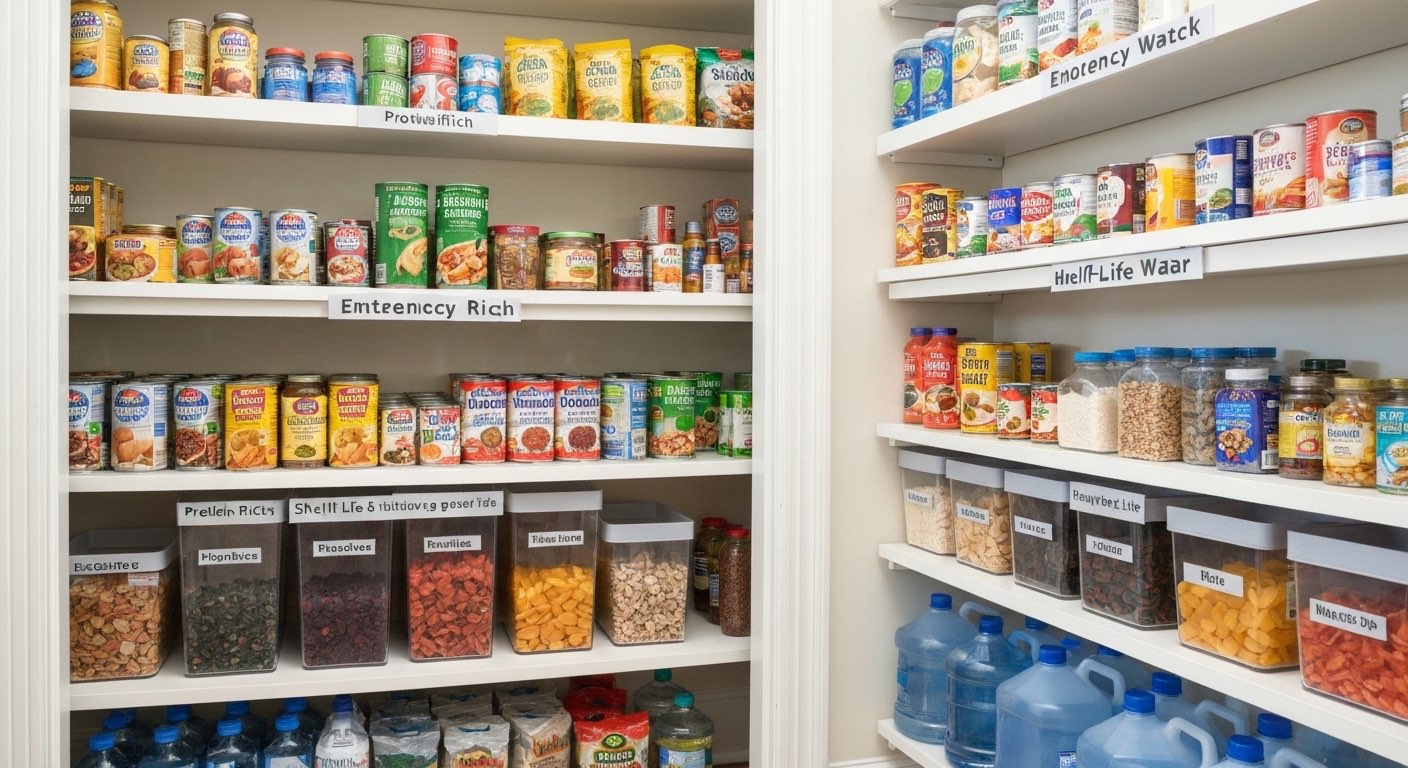
The households that ride out that kind of event comfortably are the ones that spent a year or two quietly building an emergency food supply. Not in a doomsday-prepper-bunker way. More like a “stuff happens” way. Buying extra canned goods, learning to dehydrate vegetables, stacking bags of rice and beans in the basement — it isn’t paranoia. It’s just common sense that pays off.
This guide is everything I’ve learned researching emergency food preparedness — the stuff that works, the mistakes most beginners make early on, and a practical system anyone can follow whether you’ve got a hundred bucks or a few thousand to invest. I’ve spent years comparing different approaches through specs, testing data, and long-term owner reports, from budget bulk buys to expensive freeze-dried kits, and I’ll break it all down here.
Let’s get into it.
Why Emergency Food Preparedness Matters More Than Ever
Look, I’m not going to lecture you about the apocalypse. You’re here because you already get it on some level.
But the numbers are worth looking at. FEMA recommends a minimum 72-hour food supply for every household. The Red Cross suggests two weeks. Most preparedness experts I follow — and I’ve been reading their stuff since about 2019 — push for three to six months minimum.
Here’s what actually happens in real emergencies:
- Hurricane Katrina (2005): Grocery stores emptied within hours. FEMA food didn’t arrive for days in some areas.
- Texas winter storm (2021): Supply chains collapsed. Stores that had power had bare shelves for over a week.
- COVID-19 (2020): Remember those empty pasta aisles? Yeah. Supply chain disruptions lasted months — not days.
- Maui wildfires (2023): Entire communities cut off from food distribution for weeks.
These aren’t hypotheticals. They’re Tuesday. And the trend line isn’t getting better.
The average American household has about three to five days of food on hand at any given time. That’s it. Three days between you and going hungry. In a real emergency — the kind where roads are blocked or power’s out or both — three days goes fast.
So what do you actually do about it?
How to Start Your Emergency Food Supply (The Right Way)
Here’s where most people mess up: they panic-buy a $500 freeze-dried bucket from some website and call it done. I did exactly this in 2020. Spent $480 on a “30-day emergency food supply” from a big brand I won’t name. You know what I got? A bunch of pouches that technically contained 1,800 calories per day — except the serving sizes were a joke, and the sodium content was through the roof.
That bucket is still in my basement. It’s the backup to the backup now.
A better approach? Build gradually. Diversify your methods. And actually eat what you store (more on rotation later).
Step 1: Assess Your Household Needs
Start with the basics. How many people in your household? Include pets — they need calories too. A family of four (two adults, two kids under 12) needs roughly 7,000–8,000 calories per day combined. That’s the baseline.
Think about dietary restrictions. A tree-nut allergy, for example, rules out a surprising number of emergency food products. If you’ve got gluten issues, diabetes, or food allergies, you need to plan around them now, not when the power’s out.
Also consider: do you have a way to cook? If your emergency plan assumes you’ll boil water or heat cans, you need a backup cooking method. We keep a propane camp stove with six canisters and a small rocket stove for when propane runs out. If you’re counting on your gas stove — what happens when the gas line goes down?
Step 2: Set Your Timeline Goal
I recommend building in stages:
- Week 1–2: Get to a 2-week supply (this is surprisingly easy and cheap)
- Month 1–3: Expand to 30 days
- Month 3–6: Build toward 90 days
- Month 6–12: Push to 6 months if your budget and space allow
I wrote a detailed breakdown on building a 6-month emergency food supply on a budget if you want the step-by-step numbers. Short version: you can build a solid 6-month supply for a family of four for under $2,500 if you’re strategic about it.
Step 3: Choose Your Storage Methods (and Don’t Put All Your Eggs in One Basket)
This is where it gets fun. Or overwhelming. Depends on your personality, I guess.
There are basically five main approaches to emergency food storage, and the smartest move is to use a combination. I’ll break each one down, then give you a comparison table so you can see the trade-offs at a glance.
The 5 Main Emergency Food Storage Methods Compared
1. Store-Bought Canned Goods
This is the easiest entry point. Just buy more of what you already eat — canned vegetables, soups, beans, tuna, chicken, fruit. The stuff costs $1–3 per can, it’s already shelf-stable, and you know your family will actually eat it.
We keep about 200 cans rotating at any given time. That sounds like a lot, but when you’re buying an extra 10 cans per grocery trip, you get there in a few months without feeling the pinch.
Shelf life: 2–5 years (often good well beyond the “best by” date)
Cost per day per person: $3–6
Pros: Cheap, familiar, no special equipment
Cons: Heavy, bulky, limited variety, lower nutritional density over time
2. Bulk Dry Staples (Rice, Beans, Wheat, Oats)
This is the backbone of any serious food storage plan. Twenty-five pounds of white rice at Costco runs about $15–18 and provides roughly 40,000 calories. That’s insane value.
Our bulk staple inventory right now: 150 lbs white rice, 80 lbs pinto beans, 50 lbs rolled oats, 40 lbs hard red wheat, 25 lbs sugar, 15 lbs salt, 10 lbs powdered milk. Total cost over the past year? Maybe $350.
The key is proper storage. You need food-grade buckets with gamma-seal lids, Mylar bags, and oxygen absorbers. Without those, you’re just feeding weevils. With them? White rice lasts 25–30 years. Beans go 20+.
Shelf life: 10–30+ years (properly stored)
Cost per day per person: $1–3
Pros: Cheapest option by far, incredible calorie density, very long shelf life
Cons: Requires proper packaging, limited nutrition alone (need to supplement), boring without spices
3. Freeze-Dried and Dehydrated Foods
This is the premium tier. Companies like Mountain House, Augason Farms, and ReadyWise sell #10 cans and pouches of freeze-dried meals — everything from scrambled eggs to beef stroganoff. The taste ranges from “actually pretty good” to “edible if you’re hungry enough.”
I’ve tried probably 30 different freeze-dried products over the years. Mountain House is consistently the best-tasting. Augason Farms is the best value. ReadyWise is… fine. Just fine.
The real advantage here is shelf life (25–30 years) and weight. A #10 can of freeze-dried chicken weighs almost nothing compared to canned chicken with the same calorie content.
Shelf life: 25–30 years
Cost per day per person: $8–15
Pros: Ultra-long shelf life, lightweight, decent variety, just-add-water convenience
Cons: Expensive, requires water for preparation, some products taste mediocre
4. Home Canning and Preserving
This is where homesteading and emergency prep overlap beautifully. If you’ve got a garden — or access to cheap produce from a farmer’s market — you can put up hundreds of jars of food for pennies on the dollar.
Last summer we canned 85 quarts of tomatoes, 40 pints of green beans, 30 quarts of applesauce, and about 60 jars of various jams and pickles. Total cost in supplies (jars, lids, produce we didn’t grow): maybe $200. That’s roughly 215 jars of food for under a buck each.
We’re working on a complete guide to canning and preserving food at home — it’s coming soon. In the meantime, pressure canning is the skill to learn. Water bath canning is great for high-acid foods (tomatoes, pickles, jams), but pressure canning lets you safely preserve meats, beans, soups, and low-acid vegetables.
Shelf life: 1–5 years (varies by method)
Cost per day per person: $1–4 (much less with garden produce)
Pros: Very cheap with garden produce, you control ingredients, satisfying skill to learn
Cons: Requires equipment and knowledge, time-intensive, shorter shelf life than commercial options
5. Growing Your Own (Survival Gardening)
Nothing beats the ability to produce your own calories. A well-planned survival garden can feed a family of four on as little as 4,000 square feet — though I’d aim for more like 6,000–8,000 square feet to build surplus for preserving.
We grow potatoes (calorie kings), sweet potatoes, winter squash, dry beans, tomatoes, kale, carrots, and onions. The calorie crops — potatoes, squash, beans — are the foundation. Everything else is nutrition and flavor.
I’ll have a full guide to starting a survival garden up soon. It’s something I’m deeply passionate about — growing food is the ultimate form of preparedness.
Shelf life: Varies (harvest-dependent, then preservation method)
Cost per day per person: Nearly free (just seeds, soil amendments, sweat)
Pros: Renewable food source, freshest nutrition, deeply satisfying
Cons: Requires land, knowledge, time, and a growing season — not instant
Emergency Food Storage Comparison Table
| Method | Cost Per Day/Person | Shelf Life | Space Needed | Ease of Prep | Nutritional Value | Best For |
|---|---|---|---|---|---|---|
| Store-Bought Canned | $3–6 | 2–5 years | High | Very Easy | Good | Beginners, quick start |
| Bulk Dry Staples | $1–3 | 10–30+ years | Moderate | Moderate | Moderate (needs variety) | Budget-conscious, long-term |
| Freeze-Dried | $8–15 | 25–30 years | Low | Easy (just add water) | Good | Portability, long-term, convenience |
| Home Canned | $1–4 | 1–5 years | Moderate | Moderate | Excellent | Homesteaders, gardeners |
| Survival Garden | Nearly free | Seasonal | Outdoor space | Skill required | Excellent | Long-term self-sufficiency |
My recommendation? Build your base with bulk dry staples (cheap, long-lasting), supplement with store-bought cans for variety and convenience, add freeze-dried products for specific gaps, and develop your canning and gardening skills for the long game.
📚 Recommended Resource: The Lost Superfoods
One resource that completely changed how I think about long-term food storage is The Lost Superfoods. It’s a guide to 126 forgotten survival foods and preservation methods — some dating back centuries — that store for years without refrigeration.
What I love about it: these aren’t theoretical. I’ve personally tried the hardtack recipe, the pemmican instructions, and the supercharged survival bread. The pemmican recipe alone is worth it — I made a batch last fall that’s still good sitting in my pantry at room temperature. The book covers techniques that our great-grandparents knew but most of us have forgotten.
If you’re serious about building a truly resilient food supply, this is one of the best investments I’ve made.
How to Store Emergency Food the Right Way
Buying food is step one. Keeping it viable for years? That’s the real skill.
I learned this the hard way. My first year of food storage, I lost about 30 pounds of flour to pantry moths because I stored it in the original paper bags like a genius. Another time, I stacked #10 cans on a concrete basement floor — and the bottoms rusted out within two years from moisture wicking up through the concrete.
Expensive lessons. Here’s what actually works:
The Enemies of Stored Food
There are four things that destroy food storage. Every single storage decision you make should address these:
- Heat — Every 10°F increase roughly halves shelf life. A cool basement (55–65°F) is ideal. A hot garage in midsummer? You’re cooking your food before you eat it.
- Light — UV breaks down nutrients and accelerates degradation. Store everything in opaque containers or dark spaces.
- Moisture — Humidity breeds mold, bacteria, and rust. Ideal humidity is below 15% inside the container. Use desiccants.
- Oxygen — Oxidation degrades fats, flavors, and nutrients. Oxygen also lets insects survive. Oxygen absorbers in sealed Mylar bags eliminate this.
Best Containers for Long-Term Food Storage
Mylar bags + oxygen absorbers inside food-grade buckets — this is the gold standard for bulk staples. A 5-gallon Mylar bag with a 2000cc oxygen absorber, heat-sealed and placed inside a food-grade bucket with a gamma-seal lid. That bag of rice will outlast you.
#10 cans — Commercial freeze-dried products come in these. They’re excellent, but you can’t reseal them well once opened. Plan to use the contents within a few weeks of opening.
Mason jars — Perfect for smaller quantities, spices, dehydrated foods. You can even vacuum-seal them with a FoodSaver jar attachment. We have probably 50 jars of dehydrated vegetables, herbs, and spice blends on our shelves.
Avoid: Original packaging for anything long-term. Cardboard, paper, thin plastic — bugs will get through all of it eventually.
Food Rotation: The FIFO System
FIFO stands for First In, First Out. It’s what every restaurant and grocery store uses, and it’s critical for your food storage.
When you buy new cans, they go to the back. You eat from the front. Same with everything else. Date everything with a Sharpie when you buy it.
We do a full inventory every six months — usually January and July. I use a simple spreadsheet (nothing fancy) that tracks what we have, when it expires, and what needs restocking. Takes about two hours, and it’s saved us from some ugly surprises.
The biggest mistake people make? Buying a ton of food and never touching it. Your emergency supply should be a living system. You eat from it. You replace what you eat. Nothing sits there for a decade untouched — except maybe those Mylar-sealed bulk staples, which is fine because they’re designed for that.
Water: The Part Everyone Forgets
Quick sidebar because I can’t write an emergency food guide without mentioning this: water matters more than food.
You can survive three weeks without food (miserably, but you’ll live). Without water? Three days. Maybe less in heat.
And here’s the thing — almost all emergency food preparation requires water. Rice? Water. Freeze-dried meals? Water. Oatmeal? Water. If your water supply fails, your food supply is crippled too.
We store 55 gallons in food-grade drums plus another 30 gallons in cases of bottled water. We also have two Berkey water filters and a LifeStraw for backup. Minimum recommendation: one gallon per person per day, for at least two weeks. Family of four? That’s 56 gallons just for drinking and basic cooking.
Emergency Cooking Without Power
Your beautiful stored food doesn’t help much if you can’t prepare it. Plan B for cooking is non-negotiable.
What we use:
- Propane camp stove — Our primary backup. Boils water in 4 minutes. We keep six 16oz propane canisters plus one 20lb tank with an adapter hose.
- Rocket stove — Burns twigs and small wood. Free fuel, works forever. I built mine from a kit for $45. Best money I’ve ever spent.
- Charcoal grill — We keep 40 lbs of charcoal stored. Good for morale too — grilled food during a crisis feels almost normal.
- Solar oven — Slow but effective on sunny days. Great for beans, stews, bread. Zero fuel cost.
Whatever you choose, practice with it before you need it. I’ve watched people try to light a camp stove for the first time during an actual emergency. It’s not pretty.
Building Your Emergency Food Pantry on a Budget
I keep coming back to budget because it’s real. Not everyone can drop $2,000 at once on food storage. We certainly couldn’t when we started.
Here’s what a realistic month-by-month build looks like on a $50/month budget:
Month 1 ($50): 50 lbs rice ($18), 25 lbs pinto beans ($15), cooking oil ($5), salt & spices ($12). Congratulations — you now have about 100,000+ calories stored. That’s roughly a month of survival food for one person.
Month 2 ($50): 25 lbs oats ($12), powdered milk ($10), honey ($8), 20 cans assorted vegetables ($20). You now have variety and nutrition.
Month 3 ($50): Mylar bags and oxygen absorbers ($15), food-grade bucket ($8), more canned goods ($27). Now your bulk staples are properly stored.
Month 4–6: Continue building — canned meats, peanut butter, pasta, more staples, vitamins. Mix it up.
For the full breakdown with a printable checklist, see our guide on building a 6-month emergency food supply on a budget.
By month six, you’ll have spent $300 and have a solid three-month supply for two adults. That’s less than most people spend on eating out in a single month.
What Foods to Prioritize for Emergency Storage
Calorie-Dense Staples (Your Foundation)
- White rice (1,650 cal/lb, stores 25-30 years)
- Dried beans and lentils (1,500 cal/lb, stores 20+ years)
- Rolled oats (1,700 cal/lb, stores 20+ years)
- Pasta (1,680 cal/lb, stores 8-10 years)
- Hard red wheat berries (1,530 cal/lb, stores 30+ years — need a grain mill)
- Sugar (1,760 cal/lb, stores indefinitely)
- Cooking oil (4,000 cal/lb — but stores only 1-2 years, rotate frequently)
Protein Sources
- Canned chicken, tuna, salmon, beef
- Canned beans (ready to eat — no cooking needed)
- Peanut butter (calorie-dense, morale booster)
- Powdered milk / powdered eggs
- Freeze-dried meats (expensive but light and long-lasting)
- Jerky (short shelf life but great for go-bags)
Nutrition and Morale
Don’t underestimate morale food. In a real crisis, your kids aren’t going to be thrilled about plain rice and beans for weeks. Some items that are worth stocking:
- Coffee and tea (non-negotiable for some of us)
- Hot chocolate mix
- Hard candy and chocolate
- Popcorn kernels (surprisingly good shelf life)
- Spices — lots of spices. Garlic powder, onion powder, cumin, chili powder, Italian seasoning, cinnamon. Spices turn “survival food” into “dinner.”
- Multivitamins (to fill nutritional gaps in a limited diet)
- Honey (never expires, natural sweetener, medicinal uses)
Forgotten Preservation Methods That Actually Work
Modern prepping tends to focus on buckets, Mylar, and freeze-dried #10 cans. And those are great. But there are older methods — techniques people relied on for centuries before refrigeration existed — that deserve a spot in your plan.
I got into this after reading The Lost Superfoods, which documents 126 of these methods. A few that I’ve personally tested and now use regularly:
Pemmican — Dried meat pounded with rendered fat and sometimes berries. Native Americans survived on this stuff for months. High calorie density (about 3,500 calories per pound), and when made properly, it lasts for years at room temperature. I make a batch every fall using deer jerky and beef tallow.
Hardtack — Just flour, water, and salt baked into nearly indestructible crackers. Civil War soldiers carried it. Will it win any cooking competitions? No. Will it keep you alive and stores for decades? Absolutely.
Salt-cured and smoked meats — Before refrigeration, this was how everyone preserved protein. A properly salt-cured ham can hang in a cool space for over a year.
Fermented vegetables — Sauerkraut, kimchi, fermented pickles. They’re preservation AND probiotics. A jar of properly fermented sauerkraut lasts months without refrigeration and is genuinely good for you.
These old-school techniques aren’t just novelties. They work. And they give you options that don’t depend on buying manufactured products.
Common Emergency Food Preparedness Mistakes
I’ve made most of these myself, so consider this list a public service:
- Storing food you don’t normally eat. Your family won’t suddenly love freeze-dried broccoli just because the power’s out. Store what you eat, eat what you store.
- Ignoring nutrition for calories. Surviving on rice and sugar technically keeps you alive. Scurvy and malnutrition don’t care about your calorie count. Balance matters.
- Forgetting about cooking fuel. 500 pounds of dry beans aren’t helpful without a way to cook them. Beans need hours of simmering.
- Not rotating stock. That can of soup from 2019 buried in the back of the closet? Check it. Check everything.
- Relying on a single method. All freeze-dried? What if you run out of water? All canned goods? Hope you have storage space. Diversify.
- Telling everyone about your supply. Operational security matters. In a real crisis, a reputation for having food makes you a target — not a hero. Keep it quiet.
- Overlooking special needs. Baby formula. Pet food. Medications. Infant and elderly nutritional needs. These get missed, and they’re critical.
Emergency Food Preparedness Checklist
Here’s a quick checklist to assess where you stand. No judgment — just use it as a starting point:
- ☐ Water supply: 1 gallon/person/day for minimum 14 days
- ☐ Calorie base: rice, beans, oats, pasta for minimum 30 days
- ☐ Protein sources: canned meats, peanut butter, powdered milk
- ☐ Canned fruits and vegetables for nutrition and variety
- ☐ Cooking oil and fats (rotate every 6-12 months)
- ☐ Salt, sugar, honey, spices
- ☐ Comfort foods (coffee, tea, chocolate, candy)
- ☐ Multivitamins
- ☐ Alternative cooking method (camp stove, rocket stove, grill)
- ☐ Fuel for cooking (propane, charcoal, wood supply)
- ☐ Manual can opener (two of them — they break)
- ☐ Water purification (filter, tablets, or both)
- ☐ Proper storage containers (Mylar, buckets, gamma lids)
- ☐ Inventory list with dates
- ☐ Pet food (if applicable)
- ☐ Baby supplies (if applicable)
- ☐ Prescription medications / special dietary items
Frequently Asked Questions About Emergency Food Preparedness
How much emergency food should I store per person?
Plan for a minimum of 2,000 calories per day per adult and 1,200–1,500 for children depending on age. For a realistic emergency supply, aim for at least 30 days’ worth per person as your first milestone, then build toward 3–6 months. In pounds, that works out to roughly 25–30 pounds of mixed dry staples per person per month, plus supplemental canned goods and protein sources. Our family of four maintains about six months’ worth — approximately 400 lbs of dry staples plus around 200 cans and 60 home-canned jars.
What emergency foods have the longest shelf life?
Properly stored white rice and hard wheat berries can last 25–30+ years in sealed Mylar with oxygen absorbers. Sugar, salt, and honey technically last indefinitely — honey from Egyptian tombs was still edible. Commercial freeze-dried foods in #10 cans are rated for 25–30 years. Dried beans last 20+ years (though cooking time increases with age). The shortest shelf life items in most emergency pantries are cooking oils (1–2 years) and anything with fat content, which goes rancid relatively quickly.
Is it cheaper to buy emergency food kits or build your own supply?
Building your own is almost always cheaper — often dramatically so. A commercial “30-day emergency food supply” bucket typically costs $300–500 and provides minimal variety with small serving sizes. You can build a more nutritious and larger 30-day supply for $100–150 by buying bulk rice, beans, oats, canned goods, and proper storage supplies yourself. The trade-off is time and knowledge — kits are convenient but expensive. I recommend starting with bulk staples for your foundation and only using commercial kits to fill specific gaps.
How do I store emergency food in a small apartment?
Space is a real challenge, but it’s not a deal-breaker. Under-bed storage can hold 4–6 five-gallon buckets. A closet can be converted with shelving. Even a few cases of canned goods under a table or behind a couch add up. Focus on calorie-dense, compact foods: rice and beans in Mylar bags are incredibly space-efficient. Freeze-dried foods are lightweight and stackable. Skip the bulky canned vegetables and focus on canned meats and nutrient-dense options. I know apartment preppers who store six months of food for two people in a single closet and under their bed — it’s doable.
Should I use oxygen absorbers or desiccants for food storage?
Both, but they do different things. Oxygen absorbers remove oxygen from sealed containers, preventing oxidation and killing insects — essential for any long-term dry food storage in Mylar bags. Desiccants absorb moisture and are useful inside buckets or storage areas, but shouldn’t typically go inside a sealed Mylar bag with food that’s already dry (they can over-dry certain items). For standard dry staples like rice and beans, use oxygen absorbers inside the Mylar bag and optionally a desiccant packet inside the bucket but outside the Mylar. A 2000cc oxygen absorber per 5-gallon Mylar bag is the standard recommendation.
Your Next Steps: Getting Started Today
Emergency food preparedness isn’t something you finish. It’s something you maintain. The best time to start was five years ago. The second-best time is today. (Yeah, I know that’s a cliché. But it’s a cliché because it’s true.)
Here’s what I’d do this week if I were starting from scratch:
- This weekend: Buy 25 lbs of rice, 10 lbs of beans, a jar of peanut butter, and 10 cans of assorted vegetables and meats. Cost: roughly $40. You just bought yourself a 2-week emergency food supply for one person.
- This month: Order Mylar bags, oxygen absorbers, and a food-grade bucket online. Properly seal your bulk staples. Start your inventory list.
- Next month: Expand your supply. Add oats, pasta, spices, more canned goods. Get a camp stove if you don’t have one.
- Ongoing: Build the skills — learn to can food, start a garden, explore traditional preservation techniques. Read, experiment, practice.
And if you want to go deeper into the forgotten preservation methods that our ancestors used — techniques that let people store food for years without electricity, Mylar, or any modern technology — I genuinely recommend checking out The Lost Superfoods. It’s been one of the most practically useful resources in our preparedness library, and I still reference it regularly.
📚 Our Top Pick: The Lost Superfoods
126 survival foods and preservation methods that require no refrigeration, no electricity, and no modern packaging. From pemmican to salt-preserved meats to survival breads — these are the techniques that kept people alive for centuries. I’ve tested dozens of the recipes personally.
If you’re building your emergency food preparedness plan, this belongs on your shelf.
→ Get The Lost Superfoods and start preserving food that lasts for years →
Stay prepared. Stay practical. And don’t wait for the next emergency to remind you why this matters.
— Fred @ Homestead Fanatic