
This post may contain affiliate links. We earn a small commission if you make a purchase, at no extra cost to you. See our full disclosure.
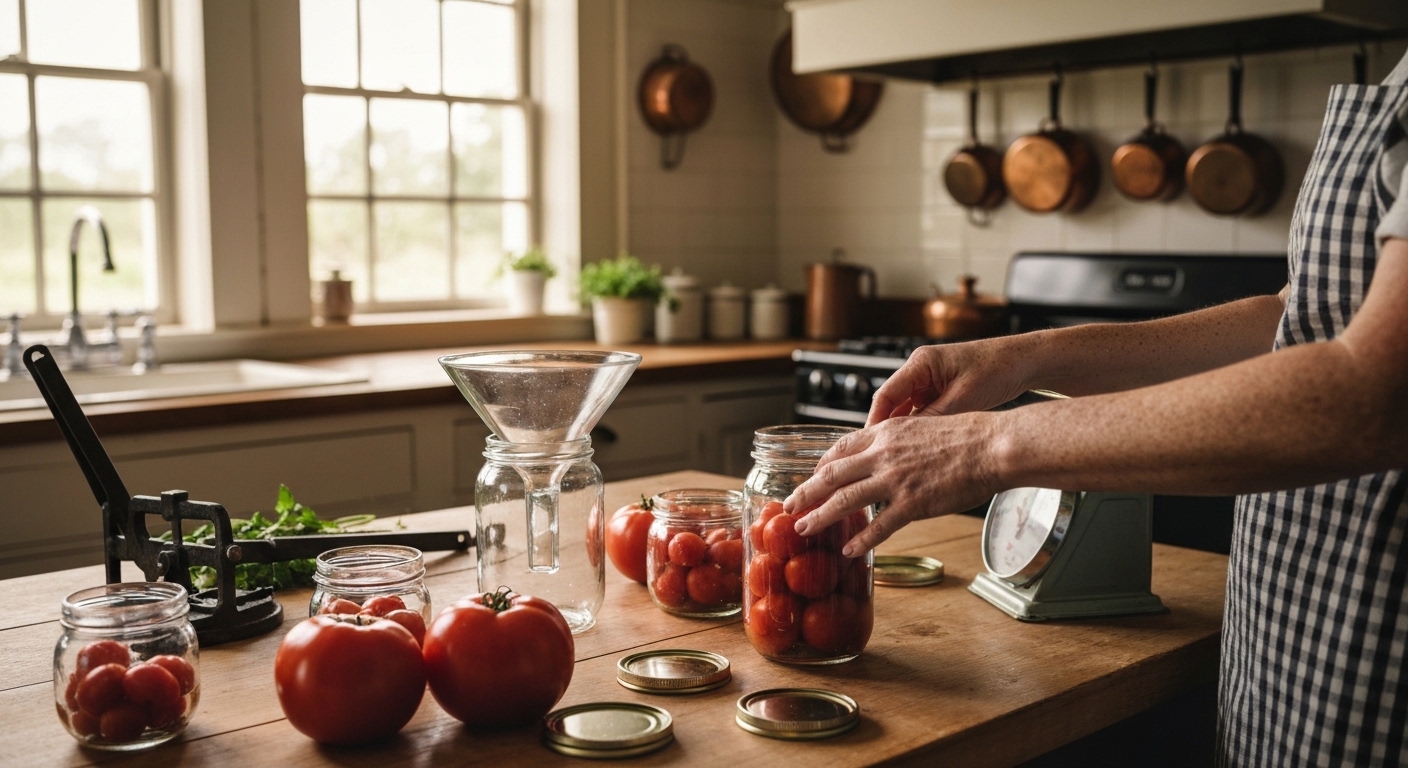
There’s something deeply satisfying about walking into your pantry and seeing rows of gleaming jars — tomatoes you grew yourself, pickles from your garden cucumbers, peach jam from the tree out back. Learning how to can food at home isn’t just a hobby. It’s a survival skill, a money-saver, and — honestly — one of the most empowering things you can do as a homesteader.
Your great-grandmother knew this. She didn’t have a freezer the size of a small car or a grocery delivery app. She had mason jars, a big pot, and knowledge passed down through generations. And that food? It lasted. Sometimes years.
Whether you’re looking to build up your emergency food supply, cut your grocery bill in half, or simply stop watching your garden harvest rot on the counter — canning is the answer. Let’s break it all down.
Why Canning? The Case for Food Preservation at Home
Here’s the thing about modern food systems: they’re fragile. One supply chain disruption, one nasty winter storm, one job loss — and suddenly the grocery store doesn’t feel so reliable. Canning and preserving food puts you back in control.
But it’s not just about emergencies (though that’s a big part of it). Home-canned food tastes better than anything you’ll pull off a store shelf. No mystery preservatives. No BPA-lined cans from who-knows-where. Just real food, preserved at peak freshness.
The economics are pretty wild too. A bushel of tomatoes from a farmers market — maybe $25 — turns into 15-20 quarts of canned tomatoes. That same quantity at the store? You’re looking at $40-60, easy. Multiply that across your entire harvest from a well-planned survival garden, and canning basically pays for itself in the first season.
Water Bath Canning vs. Pressure Canning — Know the Difference
This is where beginners get confused. And honestly? It’s where the safety stakes are highest. So pay attention.
Water bath canning uses boiling water (212°F at sea level) to process jars. It works beautifully for high-acid foods — fruits, pickles, jams, jellies, tomatoes (with added acid), salsas, and fruit butters. The acid in these foods naturally prevents the growth of dangerous bacteria.
Pressure canning is a whole different beast. It uses steam pressure to push temperatures up to 240°F — the magic number needed to kill Clostridium botulinum spores. You must use pressure canning for low-acid foods. Vegetables, meats, poultry, seafood, soups, stocks. No exceptions.
Can you water bath can green beans? No. Can you water bath can plain carrots? Absolutely not. Can you pressure can jam? Technically yes, but it’s overkill and might turn your jam into mush. Match the method to the food. Period.
Quick Reference: Which Method for What
- Water bath: Fruits, jams, jellies, pickles, relishes, tomatoes (acidified), fruit sauces, pie fillings
- Pressure canner: Vegetables (plain), meats, poultry, fish, soups, stews, stocks, beans
- Either works: Acidified tomato products, some salsas (follow tested recipes only)
Essential Canning Equipment — What You Actually Need
Good news: you don’t need a commercial kitchen. Bad news: you do need the right tools. Skimping on equipment is how jars don’t seal, food spoils, and beginners quit in frustration.
The Non-Negotiables
Mason jars. Ball, Kerr, whatever brand — just make sure they’re actual canning jars designed for heat processing. Don’t reuse spaghetti sauce jars from the store. They’re not tempered the same way and can crack under pressure. Standard sizes: half-pint, pint, and quart. (Ball Regular Mouth Quart Jars are the gold standard.)
Two-piece lids. The flat lid with the sealing compound plus the threaded band (ring). Here’s an important detail most beginners miss — flat lids are single-use. Once they’ve sealed, that sealing compound is done. Bands can be reused forever, but buy new lids each season. (Some folks swear by reusable Tattler lids — they work, but have a slight learning curve.)
Water bath canner. Essentially a large stockpot with a rack at the bottom. The rack keeps jars off the pot’s floor so water circulates underneath. You can buy a dedicated Granite Ware canner kit for $20-30, or use any pot tall enough to cover your jars with 1-2 inches of water above the lids.
Pressure canner (if you’re doing low-acid foods). Presto and All American are the two big names. Presto canners are more affordable ($80-120) and use a rubber gasket. All American canners are metal-to-metal seal — no gasket to replace, built to last decades, but they’ll run you $250+. Worth it if you’re serious.
Don’t confuse a pressure canner with a pressure cooker. They’re different appliances. Instant Pots and similar electric pressure cookers have not been validated for home canning by the USDA. Don’t risk it.
The “Makes Life Way Easier” Tools
- Jar lifter — tongs designed to grip hot jars. You will burn yourself without these.
- Canning funnel — wide-mouth funnel that fits mason jars. Keeps rims clean for proper sealing.
- Lid lifter — magnetic wand to fish lids out of hot water (though newer lids don’t require pre-heating).
- Bubble remover / headspace tool — thin spatula-like tool plus built-in headspace measurement.
- Kitchen towels — lots of them. Canning is a wet, hot process.
Most of these come bundled in a canning tool kit for under $15. Grab one. You’ll use every piece.
How to Can Food: Step-by-Step Water Bath Canning
Let’s walk through the whole process with something simple — say, a batch of dill pickles or whole tomatoes. Once you’ve done this a few times, it becomes almost meditative. Almost.
Step 1: Gather a tested recipe. This isn’t the place for creativity. Use recipes from the USDA Complete Guide to Home Canning, the Ball Blue Book, or the National Center for Home Food Preservation. These recipes have been laboratory-tested for safety. That Pinterest recipe with “just a splash of vinegar”? Skip it.
Step 2: Prep your jars and lids. Wash jars in hot soapy water and inspect for chips or cracks. If processing time is under 10 minutes, sterilize jars by boiling them for 10 minutes. For longer processing times, clean jars are fine — the processing itself sterilizes them. Set lids aside (modern Ball lids no longer need pre-simmering).
Step 3: Prepare your food. Wash, peel, chop, blanch — whatever your recipe calls for. Work quickly once things are hot. Have everything laid out and ready before you start filling jars. Mise en place isn’t just for fancy chefs.
Step 4: Fill jars. Use your canning funnel. Leave the headspace your recipe specifies — usually ½ inch for most water bath recipes. This space allows food to expand and is critical for forming a proper vacuum seal. Too much headspace? Weak seal. Too little? Food boils out and compromises the seal.
Step 5: Remove air bubbles. Run your bubble remover (or a butter knife — not metal spatulas that could scratch the glass) around the inside edge of the jar. Trapped air creates uneven processing. Add more liquid if the headspace changed.
Step 6: Wipe the rim. Use a clean damp cloth. Any food residue on the rim will prevent the lid from sealing. This is the step people skip. Don’t skip it.
Step 7: Apply lid and band. Center the flat lid on the jar, then screw the band on “fingertip tight.” Not gorilla tight — just snug enough that the lid stays put but air can still escape during processing.
Step 8: Process. Lower jars into your canner of boiling water using the jar lifter. Water should cover lids by 1-2 inches. Put the lid on the canner. Start your timer once the water returns to a full boil. Process for the time specified in your recipe.
Step 9: Cool undisturbed. When time’s up, turn off the heat. Remove jars and set them on a towel-lined counter. Don’t tilt them. Don’t touch the lids. Don’t fuss with the bands. Just walk away.
Within an hour or so, you’ll start hearing it — pop… pop… pop. That’s the sound of lids sealing, and honestly? It never gets old. Each pop means another jar of food safely preserved.
Step 10: Check seals after 12-24 hours. Press the center of each lid. If it’s concave (doesn’t flex), you’ve got a good seal. Remove the bands for storage (seriously — storing with bands on can mask a failed seal). Any jars that didn’t seal go straight into the fridge to eat within a week or two.
Step-by-Step Pressure Canning
Pressure canning intimidates people. The hissing. The jiggling weight. The vague worry that the whole thing might explode. Deep breath — modern pressure canners have multiple safety features. They’re not the terrifying contraptions your grandmother warned you about.
The process is similar to water bath canning with some key differences:
Fill your canner with 2-3 inches of hot water (not enough to cover jars — pressure canners work with steam, not submersion). Place the rack in the bottom. Load your prepared, filled jars.
Lock the lid according to manufacturer instructions. Each canner is different. With a Presto, you align arrows and twist. With an All American, you tighten wing nuts in a star pattern.
Vent the canner. Leave the weight/petcock off. Heat on high until steam shoots out of the vent pipe in a steady stream. Let it vent for 10 full minutes. This exhausts all the air from inside — you need pure steam for accurate pressure.
Place the weight on the vent. Pressure will start climbing. When your gauge reaches the pressure specified in your recipe (usually 10 or 11 PSI at sea level), start your timer. Adjust heat to maintain steady pressure. Don’t let it drop below your target — if it does, you have to restart the timer from zero.
When processing is complete, turn off the heat. Do NOT remove the weight. Do NOT try to cool the canner quickly. Let pressure drop to zero naturally. This can take 30-60 minutes. Patience.
Once depressurized, remove the weight, wait 10 minutes, then remove the lid (tilting it away from your face — that steam is hot). Lift jars out and cool on a towel. Same seal-checking routine as water bath.
If you’re serious about food preservation, The Lost Superfoods is a must-have resource. It covers 126 survival foods and preservation methods — including techniques that kept food edible for over 100 years without refrigeration. Some of these methods have been all but forgotten.
Best Foods to Can at Home
Not everything is worth canning. Some foods preserve beautifully. Others turn to mush or just aren’t worth the effort when freezing or dehydrating works better. Here’s what I’d focus on — especially if you’re growing your own from a survival garden.
Water Bath Winners
Tomatoes — the gateway drug of canning. Whole, crushed, sauced, salsa’d. A productive tomato patch can yield dozens of quarts. Add 2 tablespoons of bottled lemon juice per quart (1 tablespoon per pint) to ensure safe acidity. Don’t skip the acid. Seriously.
Pickles — cucumbers, obviously, but also pickled beets, pickled green beans (dilly beans!), pickled peppers, pickled jalapeños. The vinegar brine makes them safe for water bath processing and they’re ridiculously good.
Jams and jellies — strawberry jam, blackberry jam, pepper jelly, apple butter. These make incredible gifts, too. A jar of homemade jam beats a store-bought candle any day of the week.
Fruit — peaches, pears, applesauce, cherries. Canned in light syrup or even just water, they taste like summer in January.
Pressure Canning Champions
Chicken and beef — raw-pack chunks of meat in quart jars. Sounds weird if you’ve never done it, but pressure-canned meat is incredibly tender and ready to use in any recipe. Some homesteaders can 50+ quarts of chicken at a time when they process their flock. Which reminds me — if you’re not raising your own chickens yet, what are you waiting for?
Stocks and broths — bone broth, chicken stock, beef stock. Way better than store-bought and you control the salt content.
Beans — dry beans, cooked and canned. Pinto, black, navy, kidney. Cook once, eat for months. Way cheaper than store-bought canned beans.
Soups, stews, and chili — meal-in-a-jar convenience. Pop a quart of vegetable soup and you’ve got lunch in 3 minutes.
Food Safety: The Stuff You Cannot Ignore
Let’s talk about botulism. Not to scare you — but to make sure you respect the process.
Clostridium botulinum is a bacterium that thrives in low-acid, oxygen-free environments. Like, say, a sealed jar of improperly processed green beans. The toxin it produces is among the most lethal substances known. You can’t see it. Can’t smell it. Can’t taste it. A contaminated jar of food looks perfectly normal.
That’s why the rules exist. And they’re not suggestions.
The Non-Negotiable Safety Rules
Use tested recipes. Always. Every time. No exceptions. Grandma’s recipe from 1952 might be delicious, but if it hasn’t been validated by modern food science, you’re gambling. The USDA, Ball, and NCHFP publish tested recipes — use them.
Match the method to the food. High-acid = water bath. Low-acid = pressure canner. You cannot substitute one for the other. The science doesn’t care about your opinion.
Adjust for altitude. Water boils at lower temperatures at higher elevations, which affects processing. If you live above 1,000 feet, you need to increase processing time (water bath) or pressure (pressure canning). Check your recipe’s altitude adjustment table.
- Water bath: Add 5 minutes for 1,001-3,000 ft; 10 minutes for 3,001-6,000 ft; 15 minutes for 6,001-8,000 ft
- Pressure canning: Increase to 11 PSI (weighted gauge) or 12 PSI (dial gauge) for 2,001-4,000 ft; higher for greater elevations
Never alter ingredients that affect safety. You can reduce sugar in jam (it’ll be runnier, but safe). You cannot reduce vinegar in pickles. You cannot thicken soups with flour or cornstarch before canning (it changes heat penetration). You cannot add pasta, rice, or dairy to canned products.
When in doubt, throw it out. If a seal is broken, the lid is bulging, the food looks off, smells weird, or the liquid is cloudy when it shouldn’t be — don’t taste it. Don’t even open it indoors. Dispose of it safely.
Common Canning Mistakes Beginners Make
Almost every beginner makes a few of these. You probably will too. But forewarned is forearmed.
Not wiping jar rims. A tiny seed, a smear of tomato — that’s all it takes to prevent a seal. Wipe every rim. Every time.
Over-tightening bands. Fingertip tight. Not He-Man tight. Air needs to escape during processing for the vacuum seal to form. Over-tight bands trap air, which means no seal.
Reusing flat lids. The sealing compound deforms during the first use. Reused lids lead to seal failures. Bands? Reuse all day. Lids? Fresh ones only.
Making up recipes. “I’ll just throw some extra garlic in the salsa.” Maybe fine. “I’ll add some diced onions and reduce the vinegar.” Not fine. Changing ingredient ratios can change the pH enough to create a botulism risk. Follow. The. Recipe.
Ignoring altitude adjustments. If you live in Denver (5,280 ft), you need to adjust processing. This isn’t optional — it’s physics.
Starting with too much, too fast. Your first batch should not be 40 quarts of salsa. Start small. Do a practice batch of pickles — maybe 7 pints. Get comfortable with the process before scaling up.
Buying cheap equipment. A $12 canner from a garage sale with no rack and a warped bottom is a frustration machine. Invest in decent gear from the start.
How Long Does Home-Canned Food Last?
Here’s where things get interesting. The USDA recommends consuming home-canned food within one year for “best quality.” But quality and safety are different things.
A properly sealed jar of canned tomatoes that’s been stored in a cool, dark place? Still safe after 2-3 years. Maybe longer. The nutritional content degrades over time — vitamins break down, colors fade, textures soften — but the food remains safe as long as the seal is intact and it was processed correctly.
Commercial canned goods have been tested safe after decades. Home-canned food follows the same science, just without the industrial quality controls.
That said — eat your oldest stuff first, can fresh each season, and rotate your stock. This is especially important if you’re building a long-term emergency food supply.
Joel Salatin — arguably America’s most famous farmer — offers an incredible course called Farm Like a Lunatic. It covers everything from pasture management to direct marketing, taught by someone who’s been doing regenerative farming for decades. Whether you’ve got 5 acres or 500, his framework works.
• Presto 23-Quart Pressure Canner — The best-selling pressure canner for beginners. Handles quart jars and built to last.
• Granite Ware 12-Piece Water Bath Canner Kit — Everything you need for water bath canning in one box.
• Ball Regular Mouth Quart Mason Jars (12-Pack) — The classic. You’ll go through more of these than you think.
Getting Started: Your First Canning Day
Don’t overthink this. Seriously. People have been canning food for over 200 years, long before YouTube tutorials and Reddit debates about headspace measurements.
Here’s what I’d suggest for your very first batch:
Make refrigerator pickles first. Not even real canning — just to get comfortable with the jars and the process. Slice some cucumbers, make a brine, pack them in jars, stick ’em in the fridge. Eat them in a week. See? Not scary.
Then graduate to water bath pickled cucumbers. Classic dill pickles. The vinegar brine makes them very forgiving, and the processing time is short (usually 10-15 minutes). You’ll hear those lids pop and feel like a champion.
After that? Tomatoes. Salsa. Jam. Then when you’re feeling confident — break out the pressure canner and do some chicken broth or pinto beans.
Before you know it, your pantry will look like something out of a homesteading magazine. Rows of jewel-toned jars, each one a little insurance policy against whatever the world throws at you.
Want to learn preservation methods beyond basic canning? The Lost Superfoods dives into 126 forgotten techniques — including methods used by early American settlers, military forces, and indigenous peoples. Some of these foods were designed to last without any refrigeration. Fascinating stuff, and incredibly practical for anyone building a self-reliant pantry.
Wrapping It Up
Learning how to can food at home is one of those skills that pays dividends forever. It connects you to a tradition stretching back generations, saves real money, and builds genuine food security — the kind that doesn’t depend on supply chains or electricity.
Start simple. Follow tested recipes. Respect the science. And don’t be afraid to make mistakes — even experienced canners get a jar that doesn’t seal now and then. It happens. You eat those first and try again.
The best time to start canning was last harvest season. The second best time? Right now. Go grab some jars, find a tested recipe, and get after it. Your future self — staring at a full pantry while the neighbors panic-buy at the grocery store — will thank you.