
Disclosure: This post contains affiliate links. If you purchase through these links, we may earn a small commission at no extra cost to you. We only recommend products we believe provide genuine value. See our full disclosure.
Let me ask you something. How much do you actually think about your water supply?
If you’re on municipal water, probably not much. You turn the tap, it flows, you pay the bill. Easy. But if you’re homesteading — or even just thinking about homesteading — water becomes the thing that keeps you up at night. Drilling a well runs $5,000 to $15,000. Rainwater collection depends on, well, rain. And if you’re in a drought-prone area? Good luck.
That’s the gap the Water Freedom System claims to fill. A digital guide that teaches you to build a device that pulls drinkable water straight from the air. For under $300.
Bold claim. Let’s see if it holds up.
⚡ Quick Verdict
| Rating | ⭐⭐⭐½ (3.5/5) |
| Best For | Budget-conscious homesteaders, preppers, DIY enthusiasts in humid climates |
| Guide Price | $39.69 (occasionally discounted) |
| Estimated Build Cost | $260–$380 for parts |
| Daily Output | 2–8 gallons (humidity dependent) |
| Guarantee | 60-day money-back (ClickBank) |
👉 Check Current Price & Get Instant Access
What Is Water Freedom System?
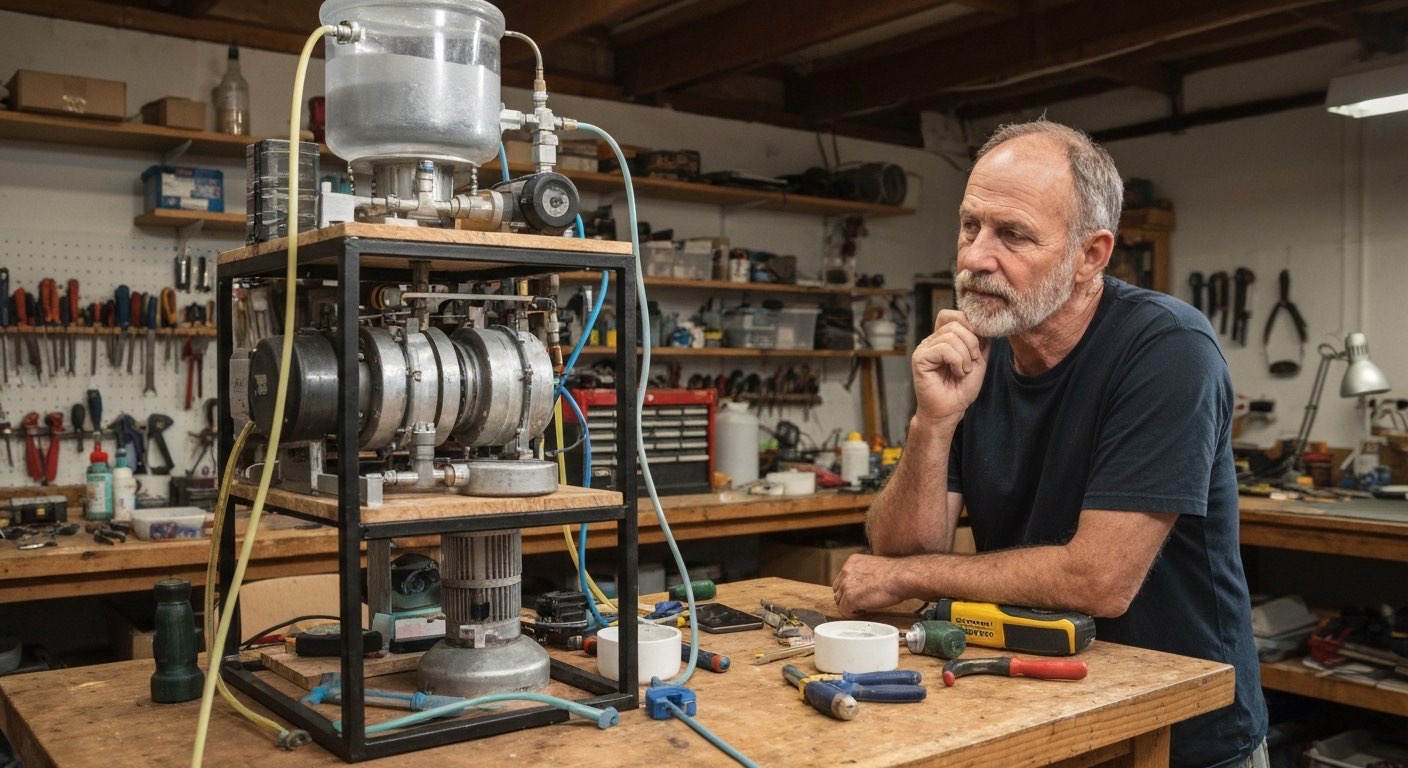
First things first — this is not a physical device that shows up at your door. Water Freedom System is a digital guide. You’re buying a set of blueprints, instructions, and a parts list that walks you through building your own atmospheric water generator (AWG) at home.
The guide is credited to Chris Burns (pen name), who describes himself as a water and survival researcher. The basic concept behind it isn’t new or controversial. Atmospheric water generation — pulling moisture out of humid air via condensation — is real technology. The military uses it. Companies like WaterGen and Genesis Systems sell commercial units for $6,000 to over $30,000.
What Water Freedom System promises is a way to replicate that basic principle at the DIY level. Build it yourself, over a weekend or two, with parts you can grab at the hardware store.
If you’ve read our Air Fountain review, you already know the ballpark. These products sit in the same space. Similar concept, different guide, different author. More on how they compare later.
What’s Inside the Guide?
When you purchase Water Freedom System, you get immediate digital access. Here’s what’s included:
- Step-by-step blueprint — Detailed diagrams showing you exactly how to assemble the water generator, with measurements and component placement
- Parts list with sourcing tips — Everything you need, plus where to find it cheaply (hardware stores, online retailers, even salvage options)
- Assembly instructions with illustrations — Color photographs and written instructions for each stage of the build
- Condensation optimization section — Techniques for maximizing water output based on your local climate conditions
- Water filtration and purification add-ons — How to make the collected water safe for drinking
The core build relies on a solar-assisted condensation approach. You’re essentially creating an efficient moisture collection system using a condenser, collection container, tubing, and a filtration setup. The guide emphasizes using thermoelectric cooling (Peltier modules) alongside basic condensation principles — which is a slightly different engineering approach than some competing guides that lean more heavily on modified dehumidifier units.
Total parts cost typically runs between $260 and $380, depending on what you already have lying around and how resourceful you are at sourcing materials. If you’ve got a workshop with basic supplies, you’ll spend less.
Pros and Cons — No Sugarcoating
What Works ✅
- The science is legitimate. Atmospheric water generation isn’t snake oil. The condensation principle is well-established and used in industrial and military applications worldwide. This guide applies real physics in a DIY-accessible format.
- Significantly cheaper than commercial AWG units. You’re looking at under $400 total versus $6,000–$30,000+ for commercial atmospheric water generators. For someone working toward off-grid self-sufficiency, that’s a compelling price difference.
- Low ongoing operational costs. Once built, the system runs on minimal electricity — the guide covers solar panel integration so you can operate it completely off-grid. No monthly water bills. No utility dependency.
- 60-day money-back guarantee. ClickBank handles refunds, and they’re fairly straightforward about it. If you buy the guide and it’s not what you expected, you’re not stuck.
Where It Falls Short ❌
- Humidity determines everything. This is the big, unavoidable caveat. If you live somewhere arid — Arizona, New Mexico, high-altitude desert — your water output will be disappointing at best. The system needs humidity to work. Below 40% relative humidity, you’re getting a trickle. Below 25%? Barely enough to water a house plant. The sales page doesn’t hammer this point hard enough, and it should.
- Output claims are optimistic. The marketing suggests substantial daily water production. Reality? In typical temperate conditions with 50-70% humidity, most builds produce somewhere in the 2-5 gallon range daily. Still useful as supplemental water — but you’re not replacing your well or municipal supply with this thing. Not even close.
- You need to actually build it. Sounds obvious, but some buyers expect more of a plug-and-play experience. This is a real DIY project. If you’ve never worked with basic tools, electrical connections, or plumbing fittings, expect a learning curve. The instructions are decent, but they’re not holding your hand through every single step like a LEGO manual would.
- The sales page is… a lot. Fear-based marketing. Countdown timers. Scarcity language. “Government doesn’t want you to know” vibes. Look — I get that this is how ClickBank products sell. But it makes the product feel sketchier than it actually is. The legitimate science underneath gets buried under layers of hype. Frustrating.
- Pen name author. Chris Burns isn’t a verifiable identity. That’s common with ClickBank survival guides, but it still raises a trust flag. You can’t look up this person’s engineering credentials because the person, as far as public record goes, doesn’t exist.
Who Is This For? (And Who Should Skip It)
You’ll get value if you:
- Live in a humid or semi-humid climate (Southeast US, Gulf Coast, Pacific Northwest, most of the Midwest during summer months)
- Want a supplemental water source for your homestead — not your only source, but a backup
- Enjoy DIY projects and have basic tool skills
- Are working on off-grid preparedness and want water redundancy
- Like the idea of water independence, even if it’s just a few gallons per day
You should probably skip this if:
- You live in a desert or consistently dry climate (below 35% average humidity)
- You need a primary, high-volume water supply for your household
- You have zero interest in building anything — this isn’t a pre-made product
- You’re uncomfortable with anonymous authors and ClickBank-style marketing
How Water Freedom System Compares to Alternatives
No guide exists in isolation. Here’s how it stacks up against other water solutions homesteaders consider:
vs. Air Fountain
This is the comparison everyone asks about. Both are ClickBank DIY guides for building atmospheric water generators. Both cost roughly the same. Both promise similar results.
The differences are in the details. Air Fountain (by John Gilmore) leans more toward a modified dehumidifier approach with video tutorials and printable blueprints. Water Freedom System (by Chris Burns) emphasizes thermoelectric cooling and solar integration more heavily.
From what I’ve seen, Air Fountain tends to get slightly better user feedback on instruction clarity — the video component helps. Water Freedom System’s solar-focused approach is appealing if you’re fully off-grid and want minimal energy dependency.
Honestly? They’re more alike than different. If you’ve already bought one, you don’t need the other. If you’re choosing between them, I’d give a slight edge to Air Fountain for beginners and Water Freedom System for people who are specifically focused on off-grid solar integration.
vs. Rainwater Harvesting
Rainwater collection is proven, cheap, and effective — when it rains. A basic setup costs $200–$500 for barrels, gutters, and a first-flush diverter. Output can be massive during rainy seasons: hundreds of gallons per storm.
The downside? Zero rain means zero water. Regulations in some states also restrict collection. An atmospheric water generator works independently of rainfall, which gives it an edge in drought scenarios. But for pure volume and simplicity, rainwater wins easily.
Smart play: use both. Rainwater as your primary collection, AWG as your drought backup.
vs. Drilling a Well
A proper well is the gold standard for off-grid water. Reliable, high-volume, doesn’t depend on weather or humidity. But drilling costs $5,000–$15,000+ depending on depth, geology, and your location. Then add the pump, pressure tank, and electrical setup.
If you have the budget — drill the well. No DIY guide competes with a real well for dependable, year-round water. The Water Freedom System is better understood as a supplemental or emergency backup for people who either can’t afford a well or want additional water security.
My Personal Take
Here’s where I level with you.
I think atmospheric water generation is a genuinely useful concept for homesteaders. The science works. The technology is real. Having a device that can pull even 2-3 gallons of water per day from thin air — that’s meaningful in an emergency. That’s your family’s drinking water covered when everything else fails.
But I also think these guides — Water Freedom System included — oversell the results. The sales pages make it sound like you’ll have unlimited water flowing forever. That’s not the reality. You’ll have supplemental water, humidity-dependent, requiring maintenance and some electrical input.
Is the guide worth $40? If you’re in a humid climate and you like building things, probably yes. The information is organized, the parts are accessible, and the 60-day guarantee means you’re not taking a huge financial risk.
If you’re in a dry climate or expecting a whole-house water solution, save your money. Look into well drilling or a commercial-grade atmospheric water generator instead.
🏡 Recommendation
Water Freedom System is a solid DIY guide for building a supplemental atmospheric water generator. It won’t replace your well or municipal supply, but for homesteaders who want water redundancy — especially in humid climates — it’s a low-risk investment with real utility.
Best for: Humid-climate homesteaders who enjoy DIY projects and want emergency water backup.
Frequently Asked Questions
Is Water Freedom System a scam?
No. The underlying science — atmospheric water generation through condensation — is legitimate and well-documented. The guide teaches you how to build a real device that produces real water. That said, the sales page overpromises on output and uses aggressive marketing tactics that feel scammy. The product itself is fine. The marketing around it deserves the side-eye it gets.
How much water does it actually produce?
It depends almost entirely on your local humidity. In humid environments (60%+ relative humidity), expect 3-8 gallons per day. In moderate humidity (40-60%), more like 1-3 gallons. Below 35% humidity, output drops dramatically and may not be worth the effort. The sales page’s top-end claims assume near-tropical conditions.
How is it different from Air Fountain?
Both are DIY guides for building atmospheric water generators. Water Freedom System emphasizes thermoelectric cooling with solar panel integration, while Air Fountain focuses on a modified dehumidifier approach with more video-based instruction. Core concept is the same. If you’re choosing between them, it comes down to whether you prefer solar-focused design (Water Freedom) or video tutorials (Air Fountain). We reviewed Air Fountain here.
Can I really build this with no experience?
Some experience with basic tools helps. You don’t need to be an engineer, but you should be comfortable with things like connecting tubing, basic wiring, and following technical diagrams. If you’ve ever assembled furniture, installed a faucet, or done minor home repairs, you’ll be fine. Complete beginners might want to enlist a handy friend for the build.
Does it work off-grid?
Yes — this is one of its strengths. The guide specifically covers solar panel integration so the system can run without grid electricity. You’ll need a small solar setup (or battery bank), but once configured, it operates independently of any utility infrastructure.
Final Verdict
Water Freedom System is a decent — not perfect — guide for building a DIY atmospheric water generator. The science checks out. The price is reasonable. The 60-day guarantee removes most of the financial risk.
Where it stumbles is in the overhyped marketing, anonymous authorship, and inflated output claims. That stuff matters, and it’s fair to be skeptical about it.
But here’s my bottom line: if you’re homesteading in a humid region and you want another tool in your water security toolkit, this guide gives you a functional starting point for under $400 total. It’s not your sole water solution. It’s your backup. Your insurance policy. And in that role, it does the job.
👉 Try Water Freedom System Risk-Free (60-Day Money-Back Guarantee)