
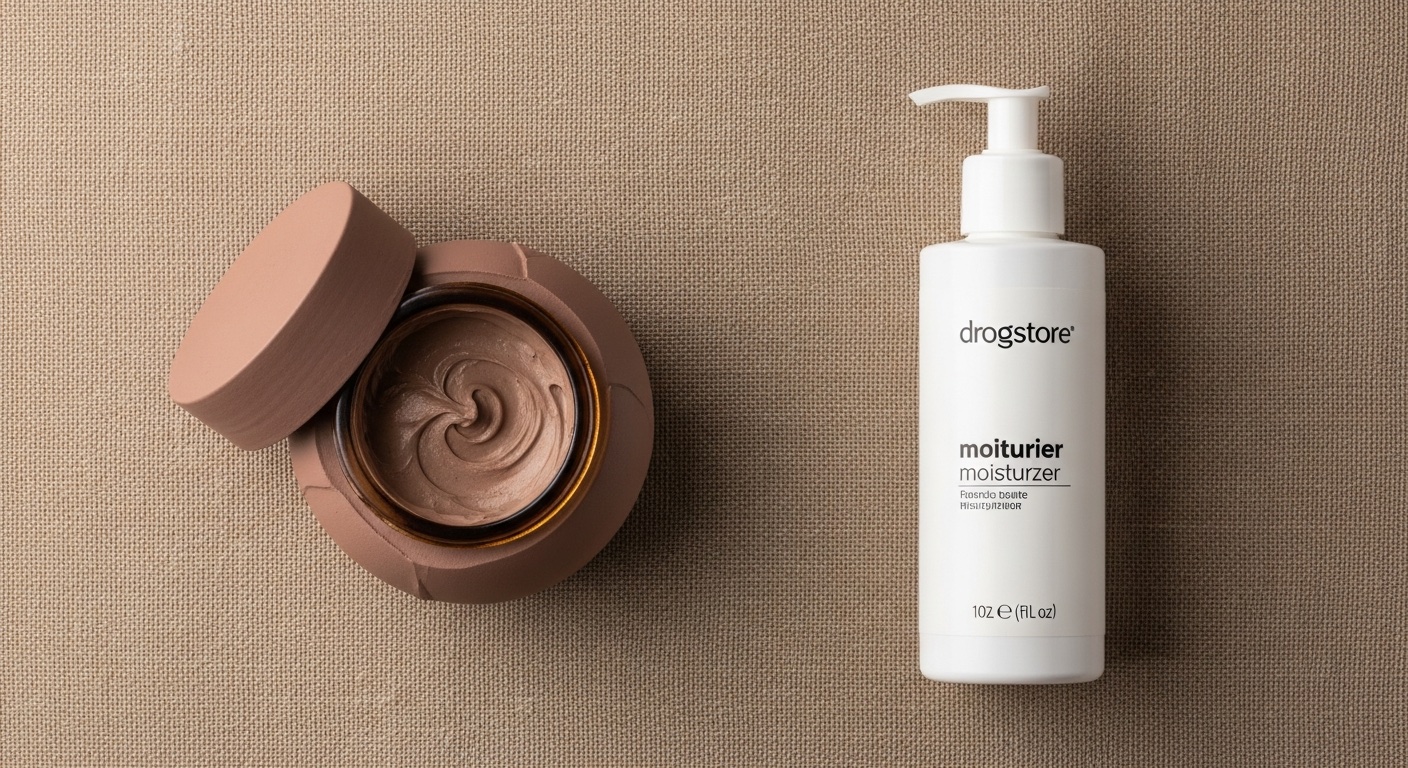
Beef Tallow vs. Drugstore Moisturizer: A Homesteader’s Comparison
My grandmother kept beef fat in a tin on the back of her stove. Half went into biscuits, half went on a windburned cheek, and she never thought twice. Three generations later I was the Costco-mom version of the same family, with a plastic pump bottle of fragranced lotion on the bathroom counter. The 2021 ice storm rerouted a lot of that, and tallow on the skin was one of the things that came back. This is the side-by-side — ingredient lists, math, skin feel, and when each is genuinely the right pick.
Quick Comparison at a Glance
If you only have thirty seconds, here’s the snapshot.
| Feature | Whipped Grass-Fed Tallow Cream | Typical Drugstore Cream |
|---|---|---|
| Source / origin | Rendered fat from grass-fed cattle, slow-cooked and whipped with a few essential oils | Water base, glycerin, mineral oil or dimethicone, preservatives, fragrance |
| Active fatty acids | Oleic, palmitic, stearic — close to the lipid profile of human sebum | Petrolatum or dimethicone film on top of skin; little biological lipid match |
| Common preservatives | None needed (anhydrous = no water = no microbe food) | Parabens, phenoxyethanol, or DMDM hydantoin |
| Cost per oz | ~$5.75 / oz ($22.99 for a 4 oz jar) | ~$0.50 / oz ($7.99 for a 16 oz bottle) |
| Vegan? | No — tallow is animal-derived | Often yes |
| Comedogenic potential | Low to moderate; well-tolerated on dry / sensitive skin | Mineral oil non-comedogenic; fragrance can irritate |
Two tools, two jobs. Now the longer version.
Ingredient Lists Side by Side
Drugstore moisturizers aren’t poison — they’re engineered. Every ingredient is doing a job: sitting on a shelf for three years, smelling like a perfume sample, spreading invisibly over a forearm in three seconds.
A typical drugstore lotion panel reads: water, glycerin, mineral oil, dimethicone, cetyl alcohol, stearic acid, glyceryl stearate, phenoxyethanol or parabens, fragrance, disodium EDTA, citric acid. Water is the bulk. Glycerin pulls moisture from the air into the top layer of skin. Mineral oil and dimethicone are occlusives that sit on top and slow water loss. Mineral oil is well-studied and generally considered non-comedogenic and well-tolerated, though it works by sitting on the skin rather than mimicking the skin’s own lipids (Rawlings & Lombard, International Journal of Cosmetic Science, 2012). Preservatives stop the water-based formula from growing mold. Fragrance is the part most reactive skin gets in trouble with.
A whipped tallow cream label reads more like a recipe: grass-fed beef tallow, jojoba oil as carrier, essential oils for scent. That’s it. No water in the jar, so no preservative system. No fragrance compound; the smell comes from a few drops of lavender or lemongrass per batch. The fatty acid profile is close to sebum, so your skin reads tallow as more of what it already makes.
I’m not anti-drugstore. I’m a label-reader now, and the tallow label is shorter.
Cost Per Use Over a Year
This part gets misreported in both directions, so I did the math from my own bathroom counter. The headline numbers look lopsided. The per-use numbers are closer.
Drugstore moisturizer. $7.99 for a 16 oz pump bottle. Three pumps per use for face and hands is about 3 mL, or 158 uses per bottle. Cost per use: ~$0.05.
Whipped tallow cream. $22.99 for a 4 oz jar. The whipped texture scoops generously, but the use-amount is tiny — less than a pea-sized scoop for a whole face. Realistic per-use weight is around 0.5 g, or roughly 222 uses per jar. Cost per use: ~$0.10. Twice drugstore per application, but the same order of magnitude — not the 50× gap the per-ounce price implies.
One tallow application a day runs a 4 oz jar 7–8 months on a face-only routine. A 16 oz drugstore bottle at three pumps a day lasts about five months. Annual: roughly $35–$40 of tallow vs roughly $19 of drugstore. A coffee-shop drink a month, not a mortgage payment.
Skin Feel: A Real Test
I ran the most honest test I could: tallow on one side of my face for two weeks, drugstore lotion on the other, switching sides each week. Texas humidity, goat-water-hauling, sunscreen on top. Real life.
Drugstore wins on first ten seconds. Pump, smooth, gone. Dimethicone gives that “silky and dry” finish almost instantly. No shine, no waiting period. If you need to be out the door in 90 seconds, drugstore is built for you.
Tallow wins on the next eight hours. The first minute, tallow has presence — it melts at skin temperature and sinks in, but you can feel it. By minute five, that’s gone. By hour three, my tallow side felt softer, less “tight.” By hour eight, my drugstore side felt like the moisturizer had quietly worn off. My tallow side still felt fed.
Tallow wins on the back of your hands. The most concrete difference. Goat-water hauling, garden work, and Texas wind eat the skin on my hands. After three weeks of leftover tallow rubbed in at night, my hands were softer than they’d been since I was twenty-three. Drugstore lotion doesn’t do that for me.
Drugstore wins on under-makeup spread. Tallow can pill if you load it heavy and immediately apply a creamy foundation. I fixed it by using less in the morning, or saving tallow for night. The day-by-day of the switch is in my 60-day whipped tallow cream review.
When Drugstore Still Makes Sense
The homestead corner of the internet sometimes pretends drugstore products are the enemy, and they’re not. There are real situations where drugstore is the smarter pick.
You need fast spread over a large area. Moisturizing arms, legs, and shoulders in the time it takes to get dressed — a pump lotion is faster, easier, and uses less per square inch. A 4 oz jar of tallow is built for face and high-impact spots, not full-body daily coverage.
You need fragrance-free or hospital-recommended. Post-surgery skin, eczema flares treated by a dermatologist, anywhere a clinician has prescribed a specific brand — follow that. The gentlest moisturizers in those categories are mainstream drugstore brands with very simple panels. Don’t trade that for a tallow cream with essential oils when you’re healing.
You work in healthcare or food service. Frequent hand-washing strips skin, and you need a moisturizer that absorbs in seconds before gloves go back on. Drugstore lotion is built for that. Tallow isn’t.
You’re vegan. Tallow is animal-derived, full stop. If a vegan ingredient list is non-negotiable, a drugstore option or a plant-based artisan cream is the right call.
You’re acne-prone with very oily skin. Tallow is well-tolerated on dry and sensitive skin, but very oily skin can be hit-or-miss with heavier occlusives. Patch on the jawline for a week if you want to test.
When Tallow Is the Right Move
The other side — the situations where drugstore is leaving something on the table.
You live somewhere dry, cold, or windy. Drugstore lotion is engineered to feel weightless, which is the wrong tool when your skin is being stripped every time you step outside. Tallow’s lipid load is a barrier, and your skin notices the difference within a week.
You read labels. If you’ve already started reading sunscreen labels, baby-product labels, or food labels, tallow’s three-ingredient panel is a quiet relief. No synthetic fragrance, no preservative system, no occlusive plastic film.
You have rosacea, eczema, or chronically reactive skin. The most common drugstore irritants are fragrance and certain preservatives. Tallow with a low concentration of well-tolerated essential oils skips both. A growing number of women in my inbox have written that tallow was the first occlusive that didn’t trigger a flare. Not medical advice — patch-test — but it’s the pattern I see.
You want fewer moving parts. One jar replaces face cream, hand cream, body balm for chapped spots, and the kid-elbow tube. By day 60 of switching, I’d quietly stopped using four other products.
You’re pregnant or breastfeeding and label-cautious. Rendered animal fat is hard to beat for ingredient minimalism. The pregnancy question usually comes down to which essential oils were blended in, and I covered the specifics in pregnancy-safe tallow skincare.

Whipped Grass-Fed Tallow Cream
$22.99 each
Grass-fed, slow-rendered tallow whipped to a frosting-soft texture. Three scents, including the all-rounder Lemongrass & Lavender.
For the day-by-day of switching to tallow, see my 60-day whipped tallow cream review.
Frequently Asked Questions
- Is mineral oil bad for your skin?
- No — cosmetic-grade mineral oil is well-studied and generally considered non-comedogenic and safe at typical lotion concentrations. The honest critique isn’t safety; it’s that mineral oil works by sitting on skin as an occlusive film rather than matching the skin’s own lipid profile. Tallow does the latter. Both can soften dry skin — different paths.
- Does tallow expire faster than drugstore moisturizer?
- It doesn’t, when stored right. Whipped tallow is anhydrous (no water), so there’s nothing for bacteria to grow in. Sealed and out of direct sunlight, a jar holds quality for around 12 months. Drugstore lotions list 12–24 months because their preservative systems target that window. Different shelf strategy, not a safety gap.
- Can I use tallow under sunscreen?
- Yes — that’s how I use it most mornings. Trick is “use less than you think.” A barely-there smear under SPF doesn’t pill. I reach for Lemongrass & Lavender under SPF and save the bergamot variant for evening because of bergamot’s photosensitivity caveat.
- Will tallow break me out?
- Tallow has a low-to-moderate comedogenicity profile and tends to be well-tolerated because its fatty acid mix is similar to sebum. Dry and sensitive skin generally do beautifully with it. Very oily, acne-prone skin can be hit or miss — patch-test on your jawline for a week first.
- Do I have to give up drugstore moisturizer entirely?
- No — and I haven’t. I keep a bottle of fragrance-free drugstore lotion in the car for full-body fast moisturizing, and I use tallow on my face, hands, and chapped spots. They’re different tools. The all-or-nothing framing makes for spicier internet content but worse outcomes.
More tallow notes: the day-by-day switch experience is in my 60-day whipped tallow cream review, and the pregnancy question is covered in pregnancy-safe tallow skincare. More in the Health & Wellness archive.