
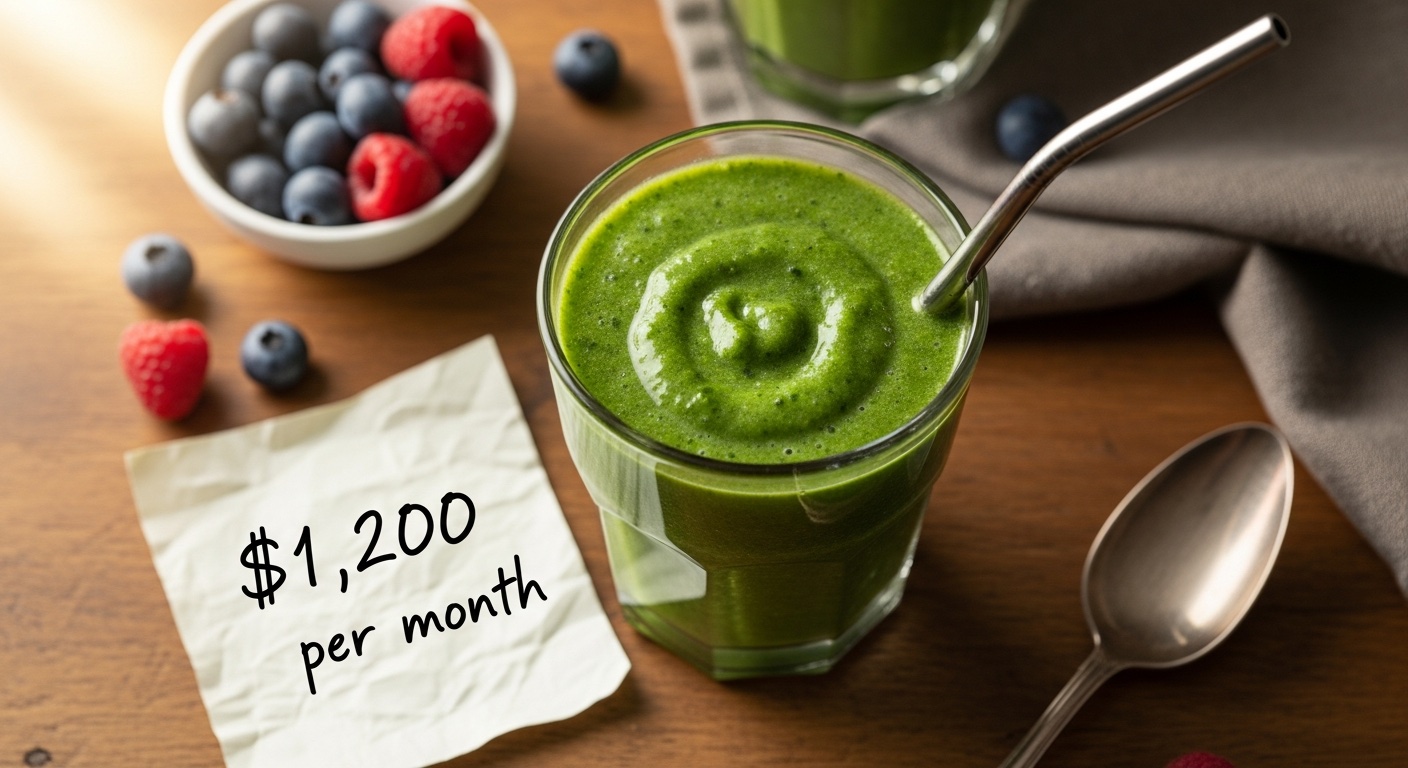
Natural Alternatives to Ozempic and GLP-1 Injections: What I Found After the $1,200/Month Quote
Last spring I sat in an exam room with my third baby asleep in the carrier and asked my doctor about Ozempic. I’d been carrying the same fifteen postpartum pounds for over a year, my A1C had crept up just enough to flag, and three friends in my mom-group had started semaglutide that winter. My doctor walked me through the mechanism and side effects. Then she handed me a printout. Cash price, no insurance coverage at our plan tier — around $1,200 a month. I drove home doing math. That moment is where this article started.
The Day My Doctor Quoted Me $1,200 a Month for Ozempic
Setting the scene honestly: third baby, ten months postpartum, perimenopause-adjacent — late thirties, body that used to bounce back in three months now taking eighteen. I’d been cleaning up my diet for a year, walking the property every morning, lifting twice a week. The scale was politely refusing to move.
My doctor wasn’t pushing Ozempic — she was answering a question I’d asked. But the math was sobering. $1,200 a month at the starting dose, annualized to about $14,400. And price wasn’t my only hesitation. Supply was patchy. The side effect profile bothered me — nausea, GI upset, rare reports of gastroparesis. The duration question kept me up: did I want to be on this forever, or use it as a runway? My doctor’s honest answer was that most patients who stop, regain. By the time I pulled into my driveway, I’d opened a tab on my phone called “Ozempic alternatives.” The next eight months lived in that tab.
Why “Natural GLP-1” Searches Are Exploding
I’m not the only person doing this research. “Natural GLP-1” and “natural Ozempic alternatives” are top-of-search queries right now, and the volume keeps growing. There are a few reasons.
First, the price tag — GLP-1 receptor agonists run between $900 and $1,400 a month at cash prices. Insurance coverage is patchy, and many plans cover them only for type 2 diabetes. Second, supply and side effects — shortages are well-documented, and the GI side effects send a fair number of people looking for alternatives. Third, the needle — even people otherwise comfortable with the medication balk at weekly injections.
Here’s the part that surprised me. “GLP-1” isn’t a drug. It’s a hormone — glucagon-like peptide-1 — that your body already makes, secreted by L-cells in your gut after you eat. It signals fullness, slows gastric emptying, and helps your pancreas release insulin. Ozempic doesn’t add new GLP-1 to your system; it’s a synthetic molecule that mimics your natural GLP-1 and resists the enzymes that break it down within minutes.
That distinction matters because “natural alternatives” can mean three different things. (a) Lifestyle and food choices that boost your own endogenous GLP-1. (b) Supplements that produce overlapping effects through different pathways. (c) Related peptide compounds — like GLP-3 — that share a metabolic family resemblance without being prescription Ozempic.
The 4 Categories of Natural Alternatives I Researched
After a few weeks reading abstracts on PubMed and asking my doctor questions, I’d organized everything I’d found into four buckets.
1. Foods that boost endogenous GLP-1. Soluble fiber (oats, beans, psyllium, apples), fermented foods (sauerkraut, kefir, kimchi), and healthy fats (olive oil, avocado, nuts) all show up in the literature as endogenous GLP-1 stimulators. Protein at the start of a meal also helps. Foundation work — free, slow, real.
2. Supplements with GLP-like effects. Berberine, apple cider vinegar, inositol, ginger, cinnamon, chromium. Some have real human data; most are oversold. Berberine in particular has gotten the “nature’s Ozempic” label, with research on its GLP-1 effects that’s legitimate but smaller in magnitude than semaglutide.
3. Newer peptide compounds. A tier of products that aren’t prescription drugs and aren’t classic supplements either. GLP-3 is one — peptide-class oral formulation. Retatrutide-class research compounds are another. The naming overlap with prescription GLP-1s is intentional and confusing.
4. Lifestyle changes. Walking after meals, intermittent fasting, strength training, sleep. The unsexy bucket. I’d already been doing most of this for a year — it hadn’t moved the scale on its own.
Honest framing: none of these is a 1:1 replacement for Ozempic. The drug is a pharmaceutical lever. What the natural categories can do, in combination, is shift the underlying physiology over a longer timeline at a fraction of the cost.
What I Tried First (Berberine, Apple Cider Vinegar, Inositol)
Bucket 2 was where I started — supplements were easiest to test and cheapest to fail at. I tried three over four months.
Berberine. A yellow alkaloid extracted from plants like goldenseal and barberry, with real research on glucose metabolism and GLP-1 secretion. A 2024 study in The American Journal of Chinese Medicine found berberine metabolites stimulate GLP-1 secretion in intestinal L-cells, tied to improvements in mitochondrial function and reductions in oxidative stress (Yang et al., 2024). I took 500mg three times a day with meals for ten weeks. What I noticed: a real but modest reduction in appetite, especially in the late afternoon. My fasting blood sugar dropped a few points. About four pounds came off. What didn’t work: the GI side effects. Cramping, loose stools, the kind of thing where you don’t want to be far from a bathroom. I cut down to twice a day and the GI calmed but so did most of the appetite effect. My deeper write-up is in my honest berberine vs. Ozempic take.
Apple cider vinegar. One tablespoon diluted before two meals a day for six weeks. The mechanism is real — research on ACV moderating post-meal blood sugar — but the magnitude is small. I could measure a slightly flatter glucose curve. I couldn’t measure anything on the scale. The two real costs: the taste, and tooth enamel (use a straw). I keep a bottle in the kitchen and use it occasionally. Not a weight loss tool.
Inositol. Myo-inositol at 2 grams twice a day for eight weeks. Well-supported for women with PCOS-pattern insulin resistance. I don’t have a PCOS diagnosis, but late-thirties cycle changes were close enough to make it worth trying. Honest report: cycles smoothed out, mood was steadier, scale didn’t move. If you’re here because of cycle issues, inositol is worth looking at. For weight alone, the data is thinner.
Summary of bucket 2: berberine had a real effect at a real GI cost, ACV is a tool not a treatment, inositol is the right answer for a related question. Together: about five pounds and steadier blood sugar. Not nothing. Not Ozempic.
Why I Eventually Looked at Peptides
Five months in, lifestyle was tightened up and supplements had moved the needle a little. The fundamental problem — late-thirties, postpartum, perimenopause-adjacent metabolism that does not want to release fat — was still there. I started reading about peptide-class options. The naming gets confusing, so let me lay it out.
GLP-1 is the prescription drug class — semaglutide (Ozempic, Wegovy), liraglutide (Saxenda), tirzepatide (Mounjaro, Zepbound). Pharmaceutical-grade peptides that bind your own GLP-1 receptors. Effective and expensive.
GLP-3 is a different category — a peptide-based supplement formulation marketed as a natural alternative to weight management injections. Not Ozempic, doesn’t claim to be Ozempic. Oral, non-prescription, designed to support the same broad outcomes (appetite regulation, blood sugar stability, gradual loss) on a longer and gentler timeline. I cover the technical distinction in my GLP-1 vs. GLP-3 explainer.
Retatrutide-class research compounds are a third bucket — newer triple-agonists studied at the pharmaceutical level, sometimes available as research-grade compounds outside prescription channels. Sourcing question is real, and I’m not going to walk you through that.
For the bigger picture on why a homesteader-style reader might still consider a peptide-class supplement, my complete guide to GLP-3 for homesteaders walks through the framework. What pulled me toward GLP-3 specifically: oral, non-prescription, an order of magnitude less than Ozempic, and a clean label.
The Natural GLP-3 Supplement I Settled On
The product I ended up on — and the one I’m still taking — is GLP Three, an oral supplement from Three International. About four months in.
To be clear: GLP Three is not Ozempic, and isn’t pretending to be. Non-prescription, vegan, oral. The mechanism is different. The timeline is different. If you’re expecting the dramatic appetite suppression semaglutide produces in the first month, you’ll be disappointed — and that’s not a product failure, it’s a category difference.
What I’ve actually noticed over four months: appetite regulation that’s quieter and more sustainable than berberine, blood sugar that stays in range, and a slow loss curve that’s added up over time. Not a dramatic before-and-after — a gradual one. The kind of trajectory a homesteader with three kids and a long timeline can live with. Side effects: notably mild. None of the GI roughness berberine gave me.
My Full Review of GLP Three
For the deeper write-up — what’s in it, the dosing protocol I follow, the four-month trajectory in detail, and the affiliate pricing — it’s all in my dedicated review.
How I’d frame it at school pickup: GLP Three didn’t replace Ozempic, because Ozempic was never going to happen at $1,200 a month. What it replaced was the void where Ozempic would have been — a real metabolic-support option that fits a homesteader budget. Four months in, I haven’t regretted it. For broader weight-and-wellness reading, see the health and wellness category.
Frequently Asked Questions
- Is there really a “natural Ozempic”?
- Not in the literal sense. Nothing over the counter replicates semaglutide 1:1. What exists: foods and supplements that boost your own GLP-1, supplements like berberine that produce overlapping effects through different pathways, and peptide-class supplements like GLP-3 that work in the same metabolic neighborhood at lower intensity and cost. “Natural Ozempic” is marketing shorthand.
- Are these supplements safe to combine?
- Most can be combined cautiously, but I wouldn’t stack everything at once. Start with one and add others slowly. Berberine in particular has known interactions with prescription medications — blood thinners, diabetes drugs, blood pressure medications — so don’t add it without checking with your physician or pharmacist.
- What about during pregnancy or breastfeeding?
- Don’t. Most of these — berberine especially — are not considered safe during pregnancy or breastfeeding. Berberine has shown developmental concerns in animal data and is broadly contraindicated. GLP-class peptides should not be used during pregnancy. If you’re trying to conceive, pregnant, or breastfeeding, this is a conversation for your OB.
- How long until I see results from natural alternatives?
- Longer than Ozempic. Semaglutide produces noticeable appetite changes within one to two weeks. Natural alternatives operate on a timeline of weeks to months. I noticed berberine’s appetite effect in about three weeks. GLP Three’s was subtler and accumulated over the first eight to twelve weeks.
- Can I keep using Ozempic and add a natural option?
- This is a question for your prescribing physician, not for me. The mechanisms can overlap in ways that affect your blood sugar and appetite signals. Don’t add anything to a prescription weight-loss medication without your prescriber’s input.
More from the GLP-3 cluster: the complete guide to GLP-3 for homesteaders, my full GLP Three review, the GLP-1 vs. GLP-3 explainer, and my deeper berberine vs. Ozempic write-up.