GLP-3, retatrutide, GLP3-RT — if you have been researching weight loss solutions in 2026, you have probably seen these terms everywhere. But what do they actually mean, and how do they affect your options for natural weight management?
This guide breaks it all down — what GLP-3 retatrutide is, how it works, how it compares to existing GLP-1 drugs, and why many health-conscious people are choosing natural GLP-3 supplements instead of waiting for pharmaceutical approval.
Disclosure: This post contains affiliate links. If you purchase through our links, we earn a small commission at no extra cost to you.
Retatrutide (sometimes written as GLP3-RT, GLP-3 RT, or reta GLP3) is a next-generation weight loss drug developed by Eli Lilly. Unlike current GLP-1 drugs such as Ozempic (semaglutide) or Mounjaro (tirzepatide), retatrutide is a triple hormone agonist — meaning it activates three different hormone receptors simultaneously:
GLP-1 (glucagon-like peptide-1) — suppresses appetite and regulates blood sugar
Glucagon receptor — increases energy expenditure and fat burning
This triple action is why people call it “GLP-3” — it targets three pathways instead of the one or two that current drugs address. It is not literally a third glucagon-like peptide. The “3” refers to its triple mechanism of action.
Is GLP-3 the Same as Retatrutide?
This is one of the most common questions, so let us clear it up:
Retatrutide is the pharmaceutical drug name — Eli Lilly’s injectable triple agonist currently in Phase 3 clinical trials
GLP-3 in casual usage can refer to either retatrutide OR natural supplements that support GLP-1/GIP/glucagon pathways through natural means
GLP3-RT (or GLP-3 RT, GLP3-R) specifically refers to the retatrutide drug
When you see “GLP-3” online, context matters. Pharmaceutical sites are usually discussing retatrutide. Natural health sites (like ours) are discussing natural GLP-3 supplements that activate these same pathways without synthetic drugs.
How Does Retatrutide Work?
Current GLP-1 drugs like Ozempic activate only one receptor. Mounjaro activates two (GLP-1 + GIP). Retatrutide activates all three:
Drug
Receptors Activated
Mechanism
Ozempic (semaglutide)
GLP-1 only
Single agonist
Mounjaro (tirzepatide)
GLP-1 + GIP
Dual agonist
Retatrutide (GLP3-RT)
GLP-1 + GIP + Glucagon
Triple agonist
The addition of the glucagon receptor is the game-changer. While GLP-1 reduces appetite and GIP improves metabolic efficiency, the glucagon receptor activation directly increases the rate at which your body burns stored fat for energy. This is why early clinical trials showed retatrutide producing significantly more weight loss than existing options.
Retatrutide Clinical Trial Results
Eli Lilly’s Phase 2 clinical trial results (published in the New England Journal of Medicine) showed remarkable results:
Participants on the highest dose lost an average of 24.2% of their body weight over 48 weeks
Over 90% of participants in the highest-dose group achieved at least 10% weight loss
More than 25% of participants lost over 30% of their body weight
Improvements in blood sugar, cholesterol, triglycerides, and blood pressure were also observed
For context, Ozempic typically produces 12-15% weight loss, and Mounjaro around 20%. Retatrutide’s triple-agonist approach appears to significantly outperform both.
GLP-3 Retatrutide Dosage Information
In clinical trials, retatrutide was administered as a weekly subcutaneous injection with dose escalation over several weeks:
Starting dose: 0.5 mg weekly for the first 4 weeks
Escalation: Gradually increased to 1 mg, 2 mg, 4 mg, then 8 mg or 12 mg
Maximum tested dose: 12 mg weekly (this produced the highest weight loss)
Administration: Self-injected subcutaneously (stomach, thigh, or upper arm)
Important: Retatrutide is not yet FDA-approved. It is still in Phase 3 clinical trials. The dosage information above is from clinical research, not prescribing guidelines. Any retatrutide available online outside of a clinical trial is unregulated, potentially dangerous, and illegal to sell as a consumer product.
GLP-3 Retatrutide Side Effects
Clinical trials reported the following side effects at the highest doses:
Nausea — the most common side effect (45-50% of participants)
Diarrhea — reported by 25-30% of participants
Vomiting — reported by 15-20%
Constipation — reported by 10-15%
Decreased appetite — common but generally considered a feature, not a bug
Injection site reactions — redness, itching, or bruising at the injection point
Most gastrointestinal side effects occurred during the dose escalation phase and decreased over time. However, the side effect profile is similar to (and sometimes worse than) existing GLP-1 drugs — which is one reason many people look for natural alternatives with fewer side effects.
Can You Buy Retatrutide Right Now?
As of 2026, retatrutide is NOT available by prescription. It is still in Phase 3 clinical trials, and Eli Lilly has not yet submitted it for FDA approval. Here is the current situation:
Clinical trials: Ongoing — results expected to support an FDA submission
FDA approval timeline: Earliest possible approval is late 2026 or 2027
Gray market peptides: Unregulated versions exist online, but the FDA has issued explicit warnings against purchasing them. These products have no quality control, no verified dosing, and no safety oversight.
The FDA has specifically cautioned consumers about purchasing GLP-3/retatrutide peptides from unregulated online sources.
Natural GLP-3 Alternatives: Why Many People Are Choosing Supplements Instead
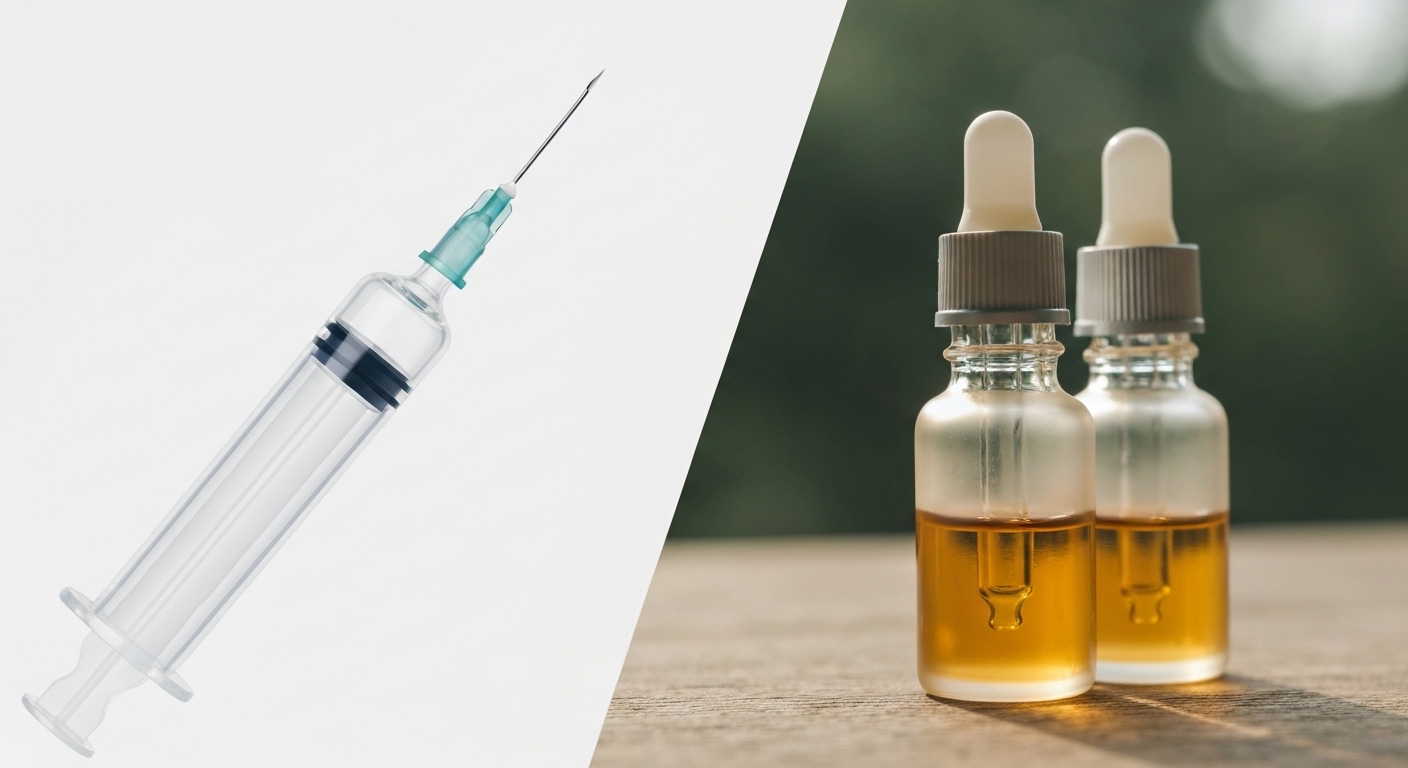
Given that pharmaceutical retatrutide is not yet available — and when it does arrive, it will likely cost $1,000+ per month and require weekly injections — many health-conscious people are turning to natural GLP-3 supplements that support the same three pathways through natural means.
The logic is simple: instead of waiting years for an expensive pharmaceutical that comes with significant GI side effects, you can support your body’s natural GLP-1, GIP, and glucagon processes now with natural compounds.
Feature
Retatrutide (Pharma GLP-3)
Natural GLP-3 Supplements
Availability
Not available — still in trials
Available now
Administration
Weekly injection
Liquid drops (sublingual)
Prescription needed
Yes (once approved)
No
Expected cost
$1,000+/month
~$85 for 12 servings
GI side effects
Common (nausea, vomiting, diarrhea)
None widely reported
Mechanism
Synthetic triple agonist
Supports natural hormone production
Regulation
FDA-regulated (once approved)
Supplement — not FDA-evaluated
GLP Three — The Leading Natural GLP-3 Supplement
GLP Three is a natural supplement formulated to support your body’s production of GLP-1 and GIP hormones — activating the same appetite-regulating and metabolic pathways that retatrutide targets, but through bioactive peptides rather than synthetic injection.
Sublingual liquid drops — fast absorption, no needles
Read our detailed GLP Three product review for a full breakdown of ingredients, pricing, and real-world experience.
Frequently Asked Questions
What does GLP-3 stand for?
GLP-3 is a colloquial term referring to the triple-agonist mechanism of retatrutide, which activates GLP-1, GIP, and glucagon receptors — three pathways. It is also used broadly to describe natural supplements that support these same three hormone pathways.
Is GLP-3 FDA approved?
No. Retatrutide (pharmaceutical GLP-3) is still in Phase 3 clinical trials. It has not been submitted for FDA approval yet. Natural GLP-3 supplements are classified as dietary supplements and do not require FDA approval, though they are not FDA-evaluated for treating any disease.
What is GLP3-RT?
GLP3-RT (also written as GLP-3 RT or GLP3 RT) refers to retatrutide specifically — the pharmaceutical triple-agonist drug being developed by Eli Lilly for weight management and type 2 diabetes.
Is retatrutide the same as GLP-3?
Retatrutide is the pharmaceutical drug that people commonly call “GLP-3” because of its triple-agonist mechanism. However, “GLP-3” is also used to refer to natural supplements that support the same three hormone pathways. They are not the same product.
Can I buy GLP-3 retatrutide online?
Legitimate pharmaceutical retatrutide is only available through clinical trials. Unregulated peptide versions sold online lack quality control and carry significant safety risks. The FDA has warned consumers against purchasing them. Natural GLP-3 supplements like GLP Three are available as an alternative.
What is the GLP-3 dosage?
For pharmaceutical retatrutide, clinical trials used doses of 0.5 mg to 12 mg weekly via injection. For natural GLP-3 supplements like GLP Three, follow the manufacturer’s recommended dosage on the product label (typically sublingual drops taken daily). See our complete GLP-3 guide for more details.
How is GLP-3 different from GLP-1?
GLP-1 drugs (Ozempic, Wegovy) activate one receptor. GLP-3 (retatrutide) activates three receptors — GLP-1, GIP, and glucagon — producing greater weight loss with additional fat-burning benefits. Read our full GLP-1 vs GLP-3 comparison.
The Bottom Line
GLP-3 retatrutide represents the next evolution in weight management — a triple-agonist approach that early clinical data suggests is significantly more effective than current GLP-1 drugs. But it is not available yet, and when it arrives, it will come with a high price tag, weekly injections, and the same GI side effects that plague existing options.
For those of us who prefer a self-reliant approach to health, natural GLP-3 supplements offer a way to support these same pathways today — without prescriptions, without needles, and without the harsh side effects. It is the same philosophy we apply to everything on the homestead: work with your body’s natural systems, not against them.