
Disclosure: As an Amazon Associate, I earn from qualifying purchases. Links below may be affiliate links. Thank you for supporting Homestead Fanatic!
Here’s a truth that took me way too long to learn: on a homestead, nothing should go to waste. Those kitchen scraps, garden trimmings, and chicken coop cleanings? They’re not garbage—they’re tomorrow’s soil.
Composting transforms what most people throw away into black gold that your garden actually craves. Rich, dark, crumbly compost that smells like a forest floor after rain. The kind of stuff that makes tomatoes explode with flavor and keeps your soil alive with beneficial microbes.
But here’s the catch: not all compost bins work the same way, and choosing the wrong one for your situation means either a stinking mess that attracts every pest in the county, or a pile that sits there doing nothing for years. We’ve tested tumblers, stationary bins, worm farms, and expandable systems to find what actually works for small homesteads—whether you’ve got a quarter acre or five.
Quick Navigation:
- Top Pick: FCMP Outdoor IM4000 Tumbling Composter
- Best Value: Geobin Expandable Compost Bin
- Best for Beginners: Miracle-Gro Dual Chamber
Why Trust Our Recommendations
We’re homesteaders who’ve killed more compost piles than we’d like to admit. Too wet, too dry, wrong ratio, forgot to turn it—we’ve made every mistake. The bins on this list are the ones that survived our learning curve and kept producing despite our imperfections.
A good compost bin should make the process nearly foolproof. It should manage moisture, provide aeration, and give you finished compost in months rather than years. Every product here delivers on those basics.
Our Top Picks at a Glance
| Product | Best For | Capacity | Price Range | Rating |
|---|---|---|---|---|
| FCMP Outdoor IM4000 | Best Overall Tumbler | 37 gal (each chamber) | $$$ | ⭐⭐⭐⭐⭐ |
| Geobin Expandable | Best Value/Large Capacity | 216+ gal | $ | ⭐⭐⭐⭐½ |
| Miracle-Gro Dual Chamber | Best for Beginners | 27.7 gal (each) | $$ | ⭐⭐⭐⭐½ |
| Redmon Green Culture | Best Stationary Bin | 65 gal | $ | ⭐⭐⭐⭐ |
| Exaco ECO-2000 Plus | Best Kitchen-to-Garden | 2.4 gal | $$ | ⭐⭐⭐⭐ |
| SQUEEZE master Tumbler | Best Budget Tumbler | 43 gal | $$ | ⭐⭐⭐⭐ |
| Bamboozle Countertop | Best Kitchen Collector | 1 gal | $$ | ⭐⭐⭐⭐½ |
| VIVOSUN Tumbler | Best Mid-Size Tumbler | 43 gal | $$ | ⭐⭐⭐⭐ |
Tumbling vs. Stationary: Which Is Right for You?
Before diving into specific products, let’s settle the big question: tumbler or stationary bin?
Tumbling Composters spin on an axis, making turning effortless. You load them up, give them a spin every few days, and finished compost arrives in 4-8 weeks. They’re elevated off the ground, which deters rodents and makes harvesting easy. The downside? Limited capacity and higher cost.
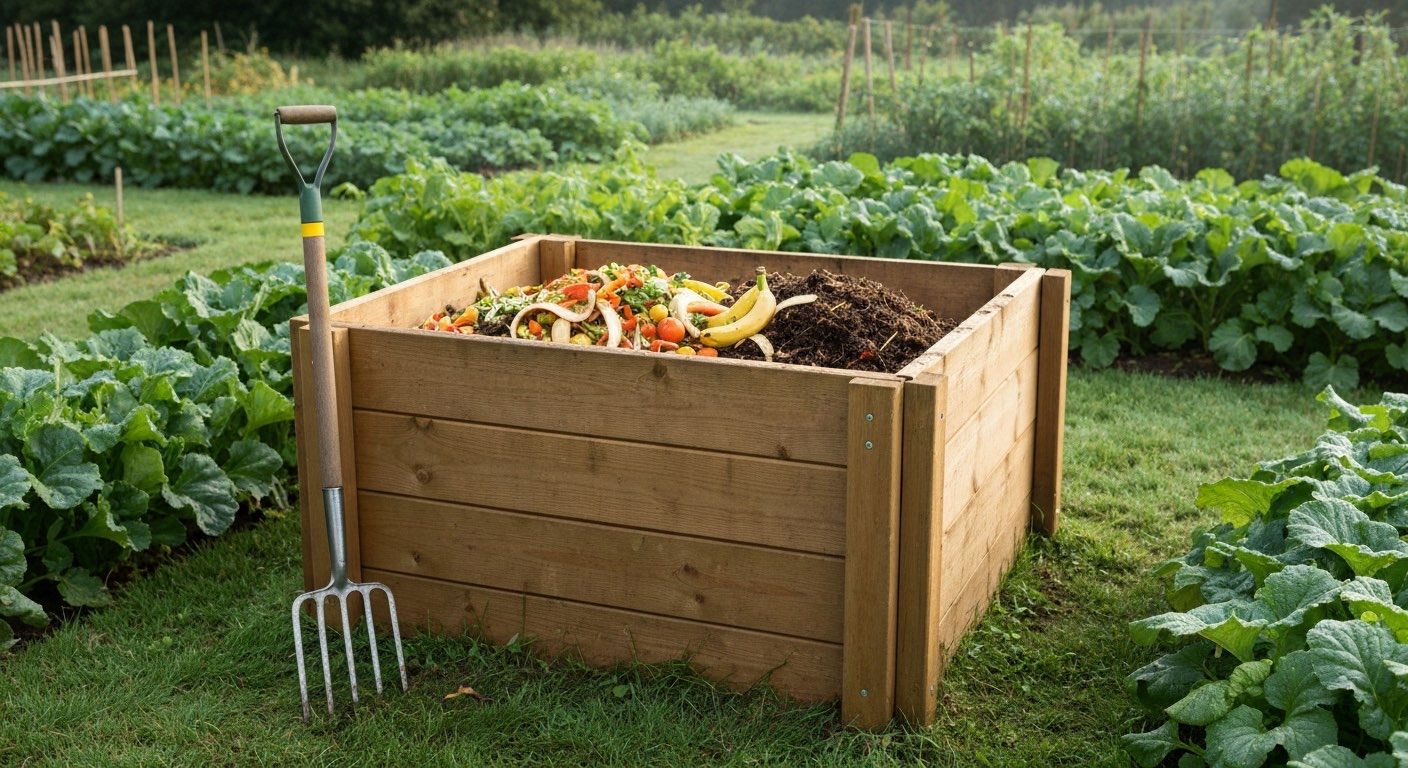
Stationary Bins sit directly on the ground, allowing worms and beneficial organisms to migrate up into your pile. They’re cheaper, hold more material, and work great if you’re patient. Turning requires a pitchfork and some effort. Compost takes 3-6 months minimum.
For small homesteads, we generally recommend a tumbler for kitchen scraps and garden waste, plus a larger stationary bin or pile for bulk materials like leaves and straw. This two-system approach gives you fast compost when you need it and slow-cooked compost for long-term soil building.
1. FCMP Outdoor IM4000 Dual Chamber Tumbling Composter — Top Pick
Why We Love It: The IM4000 is the composter that converted us to tumbling. Two independent chambers mean you can add fresh scraps to one side while the other finishes cooking. No more mixing new material into almost-ready compost and resetting the clock.
The 37-gallon chambers are large enough to handle a family’s kitchen scraps plus garden waste, but not so massive that you’re waiting forever to fill them. The internal aeration fins do most of the mixing work—you’re just rotating, not actually turning material inside.
Assembly is straightforward (about 30 minutes with a drill), and the galvanized steel frame handles weather without rusting. We’ve had ours outside through Tennessee summers and winters for three years now. Still spinning smoothly.
The sliding doors are wide enough to actually use a trowel, and the deep fins break up clumps that would otherwise compact. In summer, we’re getting finished compost in about 5 weeks.
Key Features:
- Dual 37-gallon chambers (74 gallons total)
- BPA-free, UV-resistant plastic panels
- Internal aeration fins for mixing
- Galvanized steel frame
- Large sliding doors on each chamber
- Adjustable air vents
- Rodent-resistant design
Pros:
- Two chambers allow continuous composting
- Easy to turn—even kids can spin it
- Internal fins prevent clumping
- Elevated design deters pests
- Durable construction lasts years
Cons:
- Pricier than basic bins
- Requires assembly
- Can get heavy when full (harder to turn)
- Black plastic gets hot in summer—watch moisture levels
Capacity: 37 gallons per chamber (74 total) Price Range: $100-130
2. Geobin Expandable Compost Bin — Best Value
Why We Love It: At under $40, the Geobin delivers more composting capacity than bins three times its price. This isn’t a fixed container—it’s an expandable system that grows with your needs. Start with a 3-foot diameter (about 100 gallons) and expand to over 4 feet (216+ gallons) as your homestead produces more organic matter.
The concept is elegantly simple: ventilated plastic mesh that stakes into the ground and wraps into a cylinder. No bottom (worms and beneficial soil organisms come up naturally), tons of airflow, and easy access for turning. When compost is ready at the bottom, just unwrap, shovel it out, and rewrap.
Is it fancy? No. Does it produce excellent compost? Absolutely. The open design prevents the anaerobic (stinky) conditions that plague enclosed bins with poor ventilation. Leaves, straw, kitchen scraps—it handles bulk material that would overwhelm a tumbler.
Key Features:
- Expandable 3′ to 4’+ diameter
- 216+ gallon capacity at full expansion
- Ventilated HDPE plastic mesh
- Open-bottom design for soil contact
- 4 stabilizing stakes included
- UV-stabilized material
Pros:
- Incredible value for capacity
- Expandable as needs grow
- Excellent aeration prevents odors
- Easy to access and turn
- Worms and microbes enter naturally
- Lightweight and moveable
Cons:
- Requires turning with a fork
- No rodent protection (use hardware cloth underneath if concerned)
- Looks utilitarian
- Slower compost than tumblers
Capacity: 100-216+ gallons Price Range: $35-45
3. Miracle-Gro Dual Chamber Tumbling Composter — Best for Beginners
Why We Love It: If you’re new to composting and want something that practically runs itself, the Miracle-Gro tumbler removes most ways to fail. The dual chambers work like our top pick, and the internal mixing bars do an excellent job of aerating material.
What sets this apart for beginners is the visual indicators. When the material inside darkens, smells earthy, and crumbles easily, it’s ready. No guessing, no complicated moisture meters. The Miracle-Gro name also means replacement parts are easy to find.
The 27.7-gallon chambers are slightly smaller than the FCMP, which actually makes them easier to turn when full. For a household of 2-4 people, this is plenty of capacity. We recommend this to anyone who says “I’ve tried composting but it always fails.”
Key Features:
- Dual 27.7-gallon chambers (55.4 gallons total)
- Internal mixing bars
- BPA-free recycled plastic
- Steel frame with powder coating
- Adjustable air vents
- Wide loading doors
Pros:
- Beginner-friendly design
- Trusted brand name
- Easy to turn when full
- Good airflow system
- Replacement parts available
Cons:
- Smaller capacity than competitors
- Some reports of door latches loosening over time
- Assembly instructions could be clearer
Capacity: 27.7 gallons per chamber (55.4 total) Price Range: $90-115
4. Redmon Green Culture 65-Gallon Compost Bin — Best Stationary Bin
Why We Love It: Sometimes simple works best. The Redmon Green Culture is a no-frills stationary bin that’s been quietly producing excellent compost for homesteaders for years. No spinning parts to break, no complicated assembly—just a well-ventilated container that does its job.
The snap-together panels take about 5 minutes to assemble (seriously, no tools needed). The design sits flush against the ground, allowing earthworms to migrate in and accelerate decomposition. Four access doors at the bottom let you harvest finished compost while fresh material continues cooking above.
At 65 gallons, it holds a solid amount of material but doesn’t dominate your yard. The black color absorbs heat, speeding decomposition, and the snap-lock lid keeps critters out while letting air circulate.
Key Features:
- 65-gallon capacity
- Snap-together assembly (no tools)
- Four bottom access doors
- Ventilated sides for airflow
- Snap-lock lid
- Open bottom for soil contact
Pros:
- Simple, reliable design
- No moving parts to fail
- Tool-free assembly
- Bottom harvest doors are genius
- Great price for capacity
Cons:
- Requires manual turning
- Slower than tumblers
- Lid can blow off in high wind
- Black plastic fades over time
Capacity: 65 gallons Price Range: $45-65
5. Exaco ECO-2000 Plus Kitchen Compost Collector
Why We Love It: The chain between kitchen scraps and outdoor bin breaks if collection is annoying. The Exaco ECO-2000 makes that link painless. This countertop bucket holds 2.4 gallons—about a week’s worth of scraps for most households—and the carbon filter lid eliminates odors without sealing so tight that things go anaerobic.
The stainless steel construction cleans up beautifully and won’t absorb smells over time. The handle makes carrying to your outdoor bin comfortable, and the wide mouth accepts whole apple cores and banana peels without cutting.
We keep ours by the sink and empty it every 3-4 days. After two years of daily use, it still looks new.
Key Features:
- 2.4-gallon capacity
- Stainless steel construction
- Replaceable carbon filter lid
- Comfortable carry handle
- Wide opening for easy loading
- Dishwasher safe
Pros:
- Eliminates kitchen odors
- Easy to clean
- Durable stainless steel
- Large enough to not empty constantly
- Attractive enough for countertop display
Cons:
- Requires replacement filters
- Pricier than plastic alternatives
- Not large enough for big families
Capacity: 2.4 gallons Price Range: $30-40
6. SQUEEZE master Large Tumbling Composter
Why We Love It: If you want tumbling convenience at a lower price point, the SQUEEZE master delivers. The 43-gallon capacity sits between our top pick and budget options, and the dual-chamber design lets you batch compost effectively.
The rotating mechanism is smooth enough that our 10-year-old handles turning duty. Adjustable vents help you dial in moisture levels, and the sliding doors are large enough for real use. We’ve seen this produce finished compost in 6-8 weeks during warm months.
Key Features:
- 43-gallon dual chambers
- 360° rotating mechanism
- Adjustable air vents
- Deep internal fins
- Corrosion-resistant steel frame
- BPA-free plastic
Pros:
- Good capacity at mid-range price
- Dual chambers for continuous composting
- Easy rotation mechanism
- Solid construction
Cons:
- Assembly takes about 45 minutes
- Instructions could be clearer
- Plastic not as thick as premium options
Capacity: 43 gallons Price Range: $75-95
7. Bamboozle Countertop Compost Bin
Why We Love It: Made from biodegradable bamboo fiber, the Bamboozle looks good enough to display prominently in your kitchen. The 1-gallon capacity requires more frequent emptying, but the trade-off is a countertop presence that actually encourages composting habits.
The charcoal filter keeps odors locked down, and the lid seals tight enough for fruit flies but loose enough to prevent moisture buildup. We keep ours right next to the cutting board—which means scraps actually go in instead of the trash.
Key Features:
- 1-gallon capacity
- Biodegradable bamboo fiber material
- Charcoal filter included
- Dishwasher safe
- Multiple color options
Pros:
- Attractive design
- Eco-friendly materials
- Effective odor control
- Easy to clean
- Encourages composting habits
Cons:
- Small capacity—frequent emptying
- Not as durable as stainless steel
- Filter replacement needed
Capacity: 1 gallon Price Range: $25-35
8. VIVOSUN Outdoor Tumbling Composter
Why We Love It: VIVOSUN makes solid gardening equipment, and their tumbler is no exception. The 43-gallon single-chamber design is simpler than dual-chamber models but perfectly adequate if you don’t mind batch composting rather than continuous.
The galvanized steel frame is beefy, and the turning mechanism feels smooth even when loaded. We like the deeply textured internal surface that helps break up clumps as material tumbles.
Key Features:
- 43-gallon single chamber
- Heavy-duty steel frame
- Deep internal mixing ridges
- Large door opening
- Adjustable ventilation
Pros:
- Sturdy construction
- Smooth rotation
- Good capacity
- Simple operation
- Trusted brand
Cons:
- Single chamber means batch composting only
- Can be hard to find in stock
- Assembly required
Capacity: 43 gallons Price Range: $80-100
How to Choose the Right Compost Bin
Consider your volume. A couple generating kitchen scraps needs maybe 30-50 gallons. A homestead with a garden, chickens, and kitchen waste might need 100+ gallons. When in doubt, go bigger—you’ll fill it.
Think about your timeline. Need compost in weeks? Get a tumbler. Willing to wait months for the good stuff? Stationary bins work fine and cost less.
Factor in your physical ability. Tumblers require less effort than forking through a pile. If bending and lifting are concerns, elevate your solution.
Consider pests. Rats, raccoons, and bears (depending on your location) love compost. Tumblers and enclosed bins deter them better than open piles.
Composting Tips for Homesteaders
The ratio matters. Aim for roughly 3 parts “browns” (dry leaves, cardboard, straw) to 1 part “greens” (kitchen scraps, fresh grass, manure). This ratio keeps things aerobic and cooking properly.
Moisture is key. Your pile should feel like a wrung-out sponge—damp but not dripping. Too wet? Add browns. Too dry? Add water or greens.
Size affects speed. A pile smaller than 3 feet cubed won’t heat up enough for fast decomposition. Tumblers work differently (agitation replaces heat), but stationary piles need mass.
Chop big stuff. The smaller the pieces, the faster they break down. Run over leaves with a mower, chop kitchen scraps, shred cardboard.
Frequently Asked Questions
What can I put in my compost bin?
Yes: Fruit and vegetable scraps, coffee grounds, tea bags (remove staples), eggshells, grass clippings, dry leaves, cardboard, paper, straw, hay, chicken manure, garden trimmings.
No: Meat, fish, dairy, oils, diseased plants, pet waste (dogs/cats), treated wood, coal ash, synthetic materials.
How long until I get finished compost?
With a tumbler and proper attention: 4-8 weeks. With a stationary bin and regular turning: 3-6 months. Neglected piles: 1-2 years.
Does compost smell bad?
Properly managed compost smells earthy—like a forest floor. Bad odors (rotten eggs, ammonia) mean something’s wrong: too wet, too much green material, or not enough air. Fix the balance and odors disappear.
Can I compost in winter?
Yes, but decomposition slows dramatically below 40°F and stops below freezing. Keep adding material—it’ll wake up in spring. Insulating your bin (straw bales around it) helps maintain some activity.
Do I need to add anything to start composting?
Nope. Bacteria, fungi, and organisms are already on your organic material. Some people add compost starter or a shovel of finished compost to speed things up, but it’s not required.
How do I keep rodents out of my compost?
Use an enclosed tumbler or bin with a solid bottom. Avoid adding meat, dairy, or oils. Bury fresh kitchen scraps under browns. If rodents persist, line the bottom of stationary bins with hardware cloth.
The Bottom Line
For most small homesteads, we recommend the FCMP Outdoor IM4000 as your primary composter. The dual-chamber design, durability, and ease of use justify the higher price. Pair it with a Geobin for overflow and bulk materials, and you’ll have a composting system that handles everything your homestead throws at it.
Starting smaller? The Miracle-Gro Dual Chamber is a forgiving entry point that produces great compost even when you don’t manage it perfectly.
Whatever you choose, the most important thing is to start. Every banana peel, coffee ground, and fallen leaf that goes into compost rather than a landfill is a win—for your soil, your garden, and the planet.
Happy composting! 🌱